

 By
What made me obsessed with Elizabeth Holmes wasn’t Theranos. It was her dog. During the waning days of Theranos, the infamous start-up that claimed it could run hundreds of diagnostic tests from a single drop of blood, CEO Elizabeth Holmes bought a dog that she brought to work every day, where he would run around untamed and shit all over the carpet. Holmes said he was a “wolf-dog.” He wasn’t. He was just a husky. And to me, this encapsulated my entire understanding of her, because of course this woman would try to scam people about what species her fucking dog is.
I’ve always been fascinated by scammers. Cult leaders. Con artists. Petty scammers I almost admire, who get away with cheating the system in ways that make you say, “Hm, good for them.” I think I’m fascinated by scammers because I really can’t get away with anything. I’ve been told I’m too honest, and my cheeks turn too red when I try to lie, which ruins it right away. So I live vicariously through the people who can, digesting every bit of content I can to figure out how they keep getting away with it.
And when it came to Elizabeth Holmes, I was particularly fascinated because she seemed so completely full of shit. I obsessively read BAD BLOOD, watched every episode of THE DROPOUT, and pored over interviews and trial coverage, analyzing her raspy vocal inflections as though I could somehow detect the lies in her voice.
From all those fragments, I assembled what I thought was a pretty complete picture of a person. A person I simply couldn’t relate to, and someone I felt morally superior to once she finally faced the consequences of her actions. I walked into YOU CAN SEE EVERYTHING (dir. Nathan Fielder and Lance Oppenheim) expecting to see a cringe-core portrait of a narcissist.
I walked out seeing something I could never have predicted.
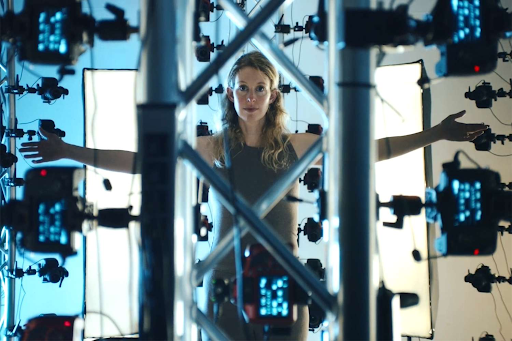
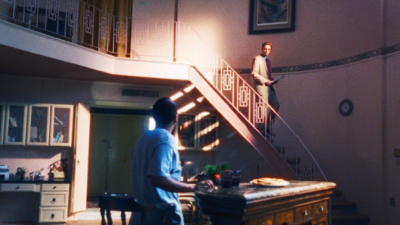
The last time I saw Elizabeth Holmes, it was on the news, where she was surrendering to an 11-year sentence for fraud in a Texas prison. Now, I’m watching her make scrambled eggs in her kitchen.
It was disorienting to see this woman go from the TED Talk stage to a domestic space, where I suddenly notice small nuances in her awkward laughs and monotone inflection. No investors to impress, no black turtleneck, no carefully rehearsed pitch about changing the world. Suddenly she’s not Elizabeth Holmes, disgraced CEO. She’s Elizabeth Holmes, the mother making breakfast.
I start noticing how she moves through this space and talks with the people closest to her. She takes things literally and doesn’t seem to understand many of Nathan’s jokes. She has a blank stare that I can’t always read, and then, just as quickly, tears well in her eyes. She sometimes struggles to explain herself and frequently lets her partner, Billy Evans, answer for her.
One moment that stuck with me was watching her encounter “Who’s on First?” She genuinely doesn’t seem to understand why it’s funny. You can almost watch her work out the punchline in real time, aware that everyone else gets the joke while she’s still figuring out exactly what they’re laughing at. As a neurodivergent person, I know that feeling: realizing everyone else seems to be operating from a social rulebook you somehow never received. Holmes has never publicly identified herself as neurodivergent, and I have no idea whether she is. I’m not interested in diagnosing her from a documentary. But I started noticing things that felt familiar to me: her literalness, her unusual affect, and moments where communicating what she means seems much harder than simply knowing what she means.
Maybe those characteristics mean nothing beyond themselves. But they changed the way I watched her. For the first time, instead of studying Holmes for evidence of how different she was from me, I found myself recognizing something. The black-and-white picture I had painted of her started developing flecks of gray.
And then the media epistemology of it all hits me: I never knew Elizabeth Holmes. I knew representations of her. Journalists selected facts. Writers constructed narratives. Amanda Seyfried constructed a character in THE DROPOUT. Elizabeth constructed a public persona. And now Nathan Fielder is constructing another version, this time in the spirit of “radical transparency,” by embedding himself in the day-to-day life of Holmes and her family in the months leading up to her imprisonment.
When I heard Fielder was behind this project (and was likely working on it while learning to fly a Boeing 737!), I wondered why the hell she thought that would be a good idea. After all, this is a man who built his career on scamming businesses for comedic value in NATHAN FOR YOU, and now he’s staying in the home of one of America’s most infamous alleged scammers. Fielder even jokes about the irony with Holmes, who meets his dark humor with complete earnestness: Theranos wasn’t a scam. It was real.
But I started to understand why Fielder might have appealed to her. Holmes has always been seen through other people’s filters, and Fielder doesn’t exactly remove that filter—he makes us aware that it’s there. His work relies on long observation, awkward silences, and a refusal to cut away when an interaction becomes uncomfortable. He lets the camera linger long enough for a polished explanation to sit beside the strange behavior we just watched. It doesn’t make what we’re seeing objective, but it makes the construction visible.
In fact, YOU CAN SEE EVERYTHING begins to feel like a culmination of everything Fielder has been doing throughout his career. You could say THE REHEARSAL was one big rehearsal for something like this: reenactment, simulation, performance, and even the filmmaking process itself become part of the documentary rather than something hidden behind it.
And then he notices the eggs.
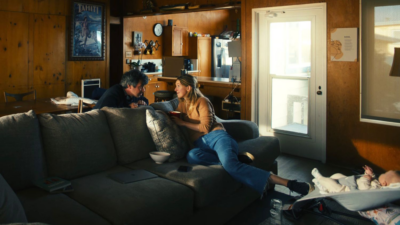
Billy Evans, Elizabeth’s fiancé and the father of her two young children, stands beside her in the kitchen, talking to the camera as she scrambles eggs. Mid-conversation, he looks down at her less-than-efficient whisking technique, takes the bowl from her hands, and starts scrambling them himself without missing a beat.
Nathan interrupts him mid-whisk. “Why’d you take the eggs?” Elizabeth giggles and explains that Billy’s method is better because it makes them fluffier. Billy offers a different explanation: He took them so Elizabeth could focus on the conversation. Except Elizabeth wasn’t speaking. Billy was.
It’s such a small interaction that it’s easy to miss. But watching Billy take something out of her hands—and watching her immediately explain why it was perfectly reasonable for him to do so—felt intensely familiar to me. And Nathan noticed it too.
It wasn’t really that Billy took the eggs that got to me. It was that Elizabeth explained why he was right to take them. I know what it is like to become fluent in explaining someone else’s behavior. For a long time, I thought that fluency was empathy.
As a child, I was sensitive, empathetic, and intensely concerned with fairness. My mother used to warn me, “Your kindness is your greatest strength, but in the wrong hands, people will use it as a weakness.” It took me a long time to understand what she meant.
By my 20, that instinct had followed me into friendships, romantic relationships, and even my own family. I became very good at accommodating other people, explaining their behavior, and trying to figure out what I could change about myself to keep a relationship intact.
In 2018, after a particularly harmful breakup, I called a mental health crisis line and soon started therapy twice a week. Therapy gave me language for two things I had been experiencing without understanding how deeply they interacted: narcissistic abuse and my own neurodivergence.
My ADHD diagnosis helped me understand why being misunderstood could feel unbearable, why I replayed interactions for hours trying to figure out what I had done wrong, and why, when someone pulled away, I moved closer. Learning about abusive relationship patterns helped me understand something harder: When someone hurt me, I became very good at explaining why.
Learning the pattern didn’t magically break it. I still people-please. I still rush to rescue people. I still sometimes mistake self-abandonment for generosity. But now I can catch myself doing it. I can ask whether I’m helping because I genuinely want to, or because I’m afraid of what happens if I don’t.
That awareness eventually became part of my work. I now advocate for survivors of domestic violence while training to become a therapist, and I’ve learned that recognizing a pattern from the outside is much easier than recognizing it while you’re living inside it.
Which brought me back to the eggs.
I have no indication that Elizabeth thinks anything is wrong with her relationship. Maybe nothing is. But she doesn’t object when Billy takes something out of her hands.
Maybe Billy really does just make fluffier eggs. But once I recognized that instinct, I couldn’t stop watching him.
Throughout the film, Billy increasingly becomes Elizabeth’s interpreter. He answers questions for her. He explains what she means and why she behaves the way she does. He speaks authoritatively about Theranos, even though he enters her life after that chapter is already over. Elizabeth is sitting right there, but somehow I keep learning what Elizabeth thinks by listening to Billy.
At first, some of this makes sense. Elizabeth is awaiting prison, and Billy is her partner and presumably one of the people she trusts most. Maybe speaking for her is one way he protects her. But then the examples accumulate. Billy has power of attorney. He posts through Elizabeth’s social media accounts, often sharing his own opinions in terse language. He inserts himself into Nathan’s attempts to speak with people from her past. The woman at the center of the story is physically present, yet increasingly ventriloquized by the man beside her.
And I kept thinking about those damn eggs.
Because the behaviors that unsettle me rarely arrive announcing themselves as control. They arrive as help. Let me do that for you. Let me explain what you mean. Let me handle this.
Individually, none of it proves much. But I had spent years learning to recognize what these behaviors can look like from the other side.
I’m not diagnosing Billy Evans with anything. I don’t know the man. But I know the pattern I recognized.
I do think he truly loves her. There are moments of tenderness between them that I don’t know how to dismiss as performance. But love and control are not mutually exclusive. Someone can genuinely believe they are protecting you while making decisions for you. Someone can want to amplify your voice while slowly becoming the person that voice has to travel through. That unsettles me more than deciding Billy is some cartoon villain, because I know how easy it is to explain harmful behavior when you believe in the love underneath it.
And suddenly I had another problem: Wasn’t I doing exactly what I’d accused everyone else of doing to Elizabeth Holmes? Taking observable behaviors, filtering them through my own experiences, and constructing a complete person from the fragments?
Maybe I was right about Billy. Maybe I was projecting. Probably both.
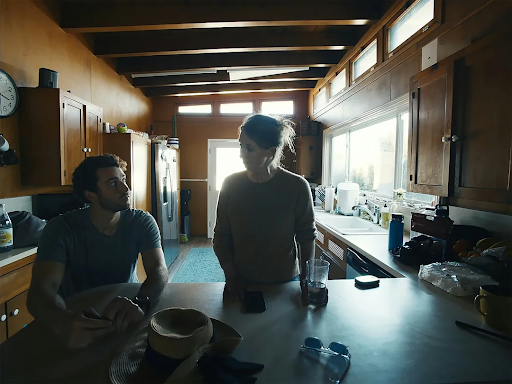
At some point, Nathan Fielder, Elizabeth Holmes, and Billy Evans climb into bed together and watch THE DROPOUT. It is difficult to describe how fucking weird this is.
Elizabeth Holmes is watching Amanda Seyfried play Elizabeth Holmes in a dramatization of events Elizabeth Holmes actually lived, while Nathan Fielder films Elizabeth Holmes watching Amanda Seyfried play Elizabeth Holmes for another representation of Elizabeth Holmes.
My Theatre Kid brain couldn’t stop thinking about playback: how seeing an experience performed back to you can sometimes reveal something that was impossible to see while you were inside it.
For most of it, Elizabeth watches with surprising neutrality. But something shifts when she encounters a scene where Seyfried’s Elizabeth is alone with Sunny Balwani, Holmes’s ex-boyfriend and COO of Theranos. He buttons her shirt and tells her, essentially, that she is beautiful but cannot be too beautiful or she won’t be taken seriously.
The real Elizabeth begins to cry and asks Nathan to turn it off.
I felt that familiarity again. I watched a woman watch an actress perform a version of intimacy in which affection, control, beauty, and devaluation had become tangled together.
What struck me wasn’t that Elizabeth suddenly recognized that reenactment as abuse. I saw no evidence that she did. What struck me was how emotional she became when someone else performed the dynamic back to her. I wondered whether she was seeing something she had never fully understood while living it. Or whether I was simply recognizing something from my own life and projecting that recognition onto hers.
Her tears tell me the scene affected her. They cannot tell me why.
Another scene makes her stop watching: Seyfried’s Elizabeth screaming something to the effect of, “Let’s get the fucking money.” Again, I thought I understood the reaction immediately. Throughout the documentary, Holmes maintains that Theranos was about changing healthcare, not simply getting rich. Watching someone perform a version of herself driven by greed seems to strike directly at who she believes herself to be.
Or maybe that’s what I want her reaction to mean. A reaction is real. The meaning we assign to it is still a story.
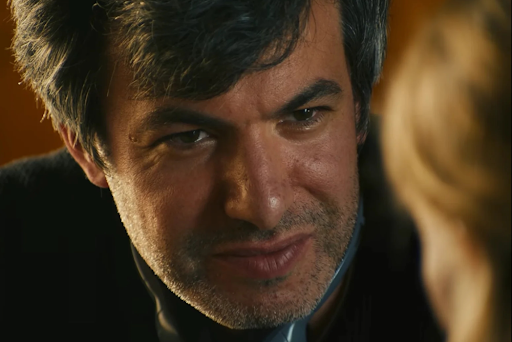
My work with survivors has also taught me something messy: People who have survived abuse don’t always tell neat stories.
People contradict themselves. Sometimes they lie. Sometimes behaviors that look manipulative from the outside make more sense when you understand what someone believes they need to do to survive. None of that means every story is true. It means dignity cannot depend upon perfect credibility. And that forced me to confront an inconsistency in myself: Why was I willing to extend that grace to some people, but not Elizabeth Holmes?
She lied. People were harmed. She bears responsibility for what she did. I’m not arguing otherwise. But perpetrating harm and experiencing harm are not mutually exclusive. Wealth doesn’t make someone immune to coercion. Intelligence doesn’t inoculate someone against manipulation. Power in one part of your life doesn’t guarantee power in another.
Being a victim also doesn’t make someone good. Maybe that was the assumption I hadn’t recognized: that victimhood had to be earned through innocence. Empathy and exoneration aren’t the same thing.
I don’t have to believe Elizabeth Holmes is innocent to wonder whether someone hurt her.
And the question I keep asking myself is: How innocent does a woman have to be before we allow ourselves to recognize that someone may have hurt her?
Maybe that’s also what Nathan does best in the film. He doesn’t rescue Elizabeth or decide what her relationships mean for her. He notices. He asks questions. He gives her information and leaves the decision with her.
When Billy takes the eggs, Nathan doesn’t tell Elizabeth how she should feel about it. He asks why Billy took them. The distinction feels tiny, but it isn’t.
Control says: I know what’s best for you. Allyship asks: What do you want to do? And the opposite of control isn’t rescue. It’s agency.
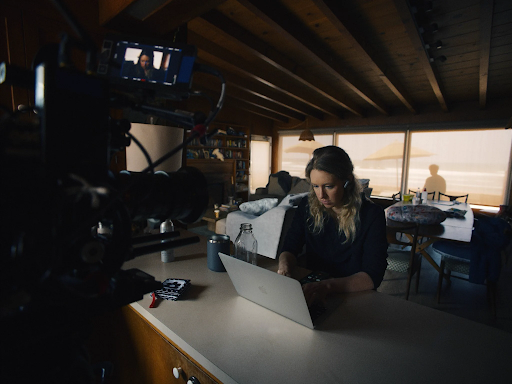
Still, somewhere along the way, I had started believing my own version of Elizabeth Holmes.
I walked into the film convinced I knew her: narcissist, scammer, liar, wolf-dog lady. Nathan gave me a different collection of fragments, and because some resembled pieces of my own life, I assembled them into another person: neurodivergent, misunderstood, people-pleasing, perhaps controlled.
Some of that interpretation is supported by what I watched. Some of it is a feeling. And feelings aren’t evidence.
Maybe the fear I think I see is fear. Maybe it isn’t. Maybe Billy’s behavior means exactly what I think it means. Maybe they share a private language I don’t understand. Maybe Elizabeth believes everything she says. Maybe she doesn’t.
I don’t know. Somehow, that was the sentence I’d avoided saying about Elizabeth Holmes for years. I don’t know.
Identification hadn’t eliminated the filter. It had simply given me a new one. I had spent the film realizing that journalists constructed an Elizabeth, Amanda Seyfried performed one, Billy interpreted one, Nathan filmed one, and Elizabeth herself had spent years constructing one.
Then I realized I had constructed one too. I had just constructed one I liked better.
I walked into YOU CAN SEE EVERYTHING expecting a portrait of a narcissist. I walked out wondering whether some of the behaviors I had interpreted as narcissism might exist alongside something else: the behaviors of someone who has also been controlled.
But I don’t even know that. What I know is that I recognized pieces of myself in a woman I had spent years reducing to a punchline. That recognition gave me more empathy for her. It did not give me access to her.
Maybe that’s what YOU CAN SEE EVERYTHING ultimately did to me. It didn’t convince me Elizabeth Holmes was innocent, or that she was telling the truth, or even that my interpretation of what I watched was right. It made me less certain. And maybe less certainty was what I needed.
You can see the CEO. The fraudster. The mother. The liar. The victim. The perpetrator. The genius. The fool. The woman making scrambled eggs.
Depending on where you’re standing, you can assemble those fragments into a completely different person.
You can see everything. And still not see the person at all.











Comments