

 By
By Shit starts getting pretty embarrassing once you find yourself admitting when art makes you feel seen. The older you get, the more alarming the admissions can become: I don’t need anybody knowing how much of myself I saw in Zendaya’s CHALLENGERS character, lest we get into how connected I was to SENTIMENTAL VALUE’s Gustav Borg. When I start reflecting on what that means for me, I start laughing a little less at the AMAZING DIGITAL CIRCUS fanatics who do just straight up see themselves as head-canoned autistic, greasepaint-slathered jesters. Commonly, we literalize perception and attribute this feeling to direct representation—ranging between anything from MOONLIGHT striking a cord with millions of closeted or once-closeted queer folks to sensing a paternal kinship during JACK when you learn that Robin Williams has hairy arms just like you—but I also mean “feeling seen” on a stage outside of the screen.
So many viewers are dependent on the arts to reach out to them, but in 2006, I was 10 years old staring at the poster for Alejandro González Iñárritu’s BABEL and fantasizing over what else was out there. Who were all these unknown faces next to Brad Pitt’s? I’ve never seen anyone on Cartoon Network look as heartbroken as the people on this poster look. I caught the trailer and curiosities only rose: What do you mean all these storylines are going to intersect?! One guy’s in Tokyo, the other’s in Tijuana! There was something in the BABEL promotional materials that showed me a version of myself that I could be: a kid who watches BABEL. With all due respect for PIRATES OF THE CARIBBEAN: DEAD MAN’S CHEST (still a masterpiece) and OPEN SEASON (surely you remember the Sony Pictures Animation comedy about a domesticated grizzly bear voiced by Martin Lawrence who, after getting stranded in the woods three days before hunting season, must grasp wooded streetsmarts from Ashton Kutcher’s one-horned buck), I had ambitions to graduate.
2005 turned new leaves. Spielberg’s WAR OF THE WORLDS wrenched my guts into more knots than any visual media before it outside of nightmares. I watched Peter Jackson’s KING KONG remake three times over Christmas break, in large part because of my childhood love of a rundown VHS copy of Honda’s KING KONG VS. GODZILLA, but also because the film constructed a gateway for a kid like me to ingratiate into a reverence for the Church of Cinema’s most primitive deities. It was a bombastic and stupid and awesome blockbuster, but the air of importance it carried clued me in on the joyous potential of taking your medicine. Artistic antibiotics were starting to look real appealing, especially after the monumentally boring BATMAN BEGINS taught me that if I keep putting my eggs in the IP basket, I would only continue to get got, and getting got has never been my forte. Cinema was a warm soup, and like how my mom surprised me with GOBLET OF FIRE tickets on a fourth grade sick day, or when my grandfather joined me for REVENGE OF THE SITH despite not speaking a lick of either Star Wars lore or fluent English, the value of my life was determined by the movies I got to share with others. It was time for next steps.
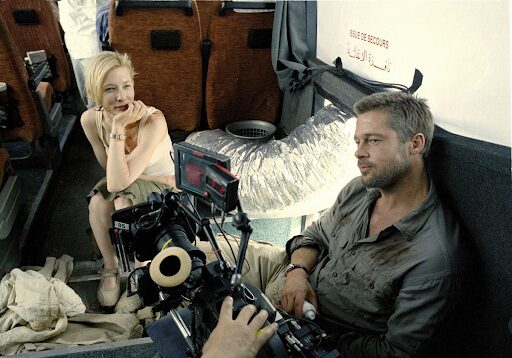
In 2006, my palate was primed to expand as quickly as it was fortifying. Along with BABEL (which I hadn’t even bothered to ask my parents about, knowing a “No” would slip from their lips before I was even done trying to pronounce “Iñárritu”), I couldn’t stop imagining what horrific delights THE DEPARTED had hidden in its reels. When my mother and father returned one October night glowing brighter than I’d seen them on birthdays, my pops couldn’t help himself from recommending the movie to me with the repeated caveat that I wasn’t old enough to watch it. If I recall correctly, he was so geeked that he told me straight up that Leonardo DiCaprio gets shot in the face. He was as locked-in as I was inputting GRAND THEFT AUTO: SAN ANDREAS cheat codes on my uncle’s PS2 when everyone was out back grilling; only Yankees World Series wins and Knicks comebacks have gotten him to that level of excitement since. I couldn’t comprehend why this quality entertainment was out of reach and what the fuck my youth had to do with it. Rationally speaking, if beer is so thirst-quenching, why isn’t Budweiser packed in my lunchbox? If these movies are the really good ones, aren’t I supposed to eat my vegetables?
Jealousy brewed throughout 2006’s 365 days. I wasn’t allowed to play HALF-LIFE 2, I was barred from the living room on every SOPRANOS Sunday, and my aunts and uncles just had to tell me how sick Zack Snyder’s 300 was. JACKASS NUMBER TWO stirred similar questions as FAHRENHEIT 9/11—“What do you mean people are paying to watch a movie that isn’t … A movie?”—questions that were only complicated by the enigmatic, stratospheric success of BORAT, one movie of many that by all accounts spoke to my childish sense of humor, yet was banned from being shown to children. The dam broke with LITTLE MISS SUNSHINE, an R-rated Best Picture nominee centered on a child protagonist who was to be taken seriously (seriously enough for Abigail Breslin to score a Best Supporting Actress nomination at the Academy Awards) following a storyline that wouldn’t be out of place in a season of DRAKE AND JOSH. This was the first time I’d ever seen my daily viewing sensibilities be of interest to adults, a sensation I’m not actually sure still exists in the current Everyone-Is-12 social pandemic.
LITTLE MISS SUNSHINE was the first R-rated movie I was ever allowed to watch in full—accompanied by my father on the living room couch as he napped through the Sufjan Stevens horns blaring through the Blockbuster rental disc—and it was my very first bit of leverage to watch more and more and more. However, before the floodwaters swept, there was a film that I watched in theaters on a toasty June afternoon that synthesized each of 2006’s allures and interests into one PG-rated package. Jared Hess, alongside Jerusha Hess, was fresh off the roaring indie phenomena of NAPOLEON DYNAMITE, and Mike White, to this day still awash in the lasting triumph of his SCHOOL OF ROCK screenplay, crafted a Jack-Black-starring vehicle in the heart of Oaxaca with NACHO LIBRE, a sports comedy about Ignacio, a hapless friar who secretly pursues a minor-to-majors stint in lucha libre as “Nacho.” It was everything and more: the transportive artistry that stood toe-to-toe with what I perceived as “serious adult cinema,” as funny as anything I would ever grow up laughing at, and—to this day—the only time I’ve ever seen my rural Mexican heritage so boisterously elevated on the world cinematic stage.
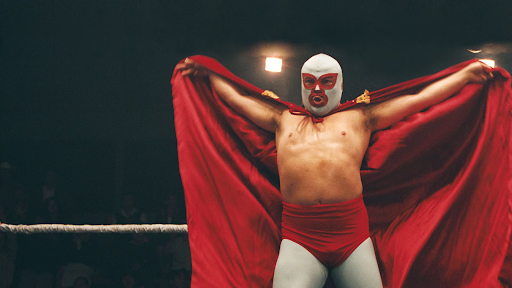
Throughout NACHO LIBRE’s sun-soaked runtime, a regional specificity courses through every frame that recalls my time in the humble town squares of Jalisco, Mexico. The doting attention to Idaho locality in NAPOLEON DYNAMITE is replicated here with aplomb, the screen populated with imperfect and beautiful Indigenous faces I remember seeing in CDMX before it turned into EPCOT. The casting of Jack Black as a light-skinned, questionably Hispanic man of the cloth is as brilliant a Happy Madison pitch as it is a relatable portrait of a cultural outsider. Speaking as someone too gringo for the vatos and too Mexican to vibe with the SoCal white kids, the way in which Ignacio defaults to a mixture of self-isolating aggression and crowd-pleasing performance through wrestling speaks to a larger identity crisis within the Mexican-American diaspora. School had me learning cursive before I could ever figure out fluent Spanish; my grandmother and I had full conversations before she died only because she learned English. You can share blood and soil with countrymen, and a lot of times they alone won’t make you feel a part of the whole. While Ignacio has a community of Catholics who look out for his doofus shenanigans, there’s a felt difference between being looked after as a duty to the Lord and being looked after because someone is proud of your work. “I don’t wanna get paid to lose. I wanna win!” says an accented Jack Black before the actor himself embarked on 20 more years of pratfalls, nutshots, and fat jokes. Sometimes the money is in losing, but the heart has got to be powered by a bit of winning.
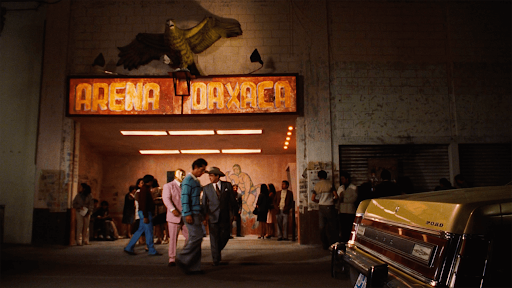
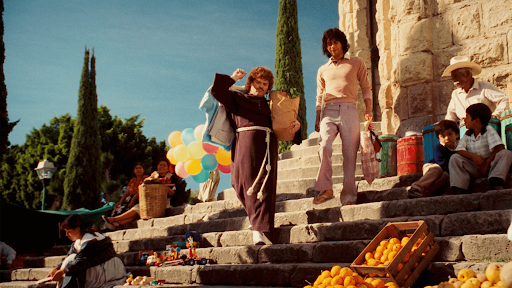
For as proud as NACHO LIBRE makes me, it’s also grounds for humiliation that the most genuine care my not-exactly-obscure culture has ever received by American cinema was tendered by a Bush-era Nickelodeon Movies fart-comedy. With the ingredients we’ve been dealt, how could we all not have diarrhea since Easters? Bathed in the saturated colors of fresh streetside produce, polyester masks, and rosary beads, the picture is rife with locations straight from family photo albums. Look around Jack Black’s silly outfits and you’ll note the paint cracks on exterior facades, the fictitious Arena Oaxaca looking apiece with el Mercado Municipal de Villa de Etla, and the Universal Studios backlot integrated as seamlessly as it’s ever been (the flash flood section of the Backlot Tour lives on 21st century celluloid as a genuine Mexican village!). Mexican-American filmmakers are so caught up in the idolatry of the culture that often they omit the fabrics, foods, and sweat of the everyday. Forced Spanglish dominates truthful dialects, and peak Liberalism whitewashes the love-hate repressions of a people they’ve simplified in the name of commercialized pride. The way Nacho farts is more truthful than any single scene in Pixar’s COCO: It comes down to a performance of a culture versus a depiction. It’s so lovely that a movie like NACHO LIBRE can feel this Mexican, but I’m also filled with such shame that nothing produced since has even gotten close to these faces, locations, and sounds.
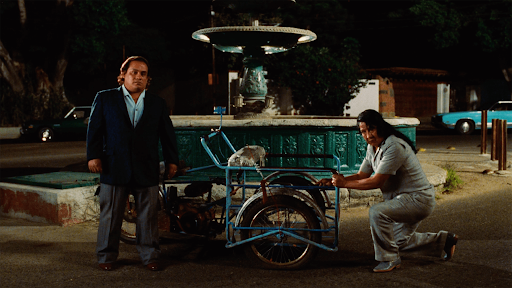
It’s all scored to a soundtrack that’s been scoured from dusty bins of 45s, as thoughtfully assembled as it is clever—forgive me for overthinking, but setting the training montage and the seduction of Nacho’s tag-team partner to KPM 1000 “Greensleeve” tracks (a legendary United Kingdom vault of publicly available stock music) is a novel choice in a comedy set in a country that built its televised media diet off whatever was cheapest to license. The sounds vary from Mexi-Ska derived from the 8 HEADS IN A DUFFEL BAG score, to space-age mambo, Little Joe and the Latinaires, tropacalisma, and bolero (that mariachi demolishes “Piel Canela” at Ramses’ party). Beck’s original tracks quite elegantly coexist with Danny Elfman’s loopy, brassy orchestrations, the former’s “10,000 Pesos” somberly strumming over a montage of wrestlers and their stats (real luchadors posing for some of the film’s most striking visuals), while the latter’s “Ramses Suite” intensifies the marquee silliness of Jack Black not only squaring off against a Mexican silverback gorilla, but surviving. Despite a contractual dispute between the dueling composers—compromised by Elfman receiving sole composer credit while Beck’s tracks are individually listed as soundtrack contributions—their respective compositions paint an unexpected emotional soundscape for a story where the pursuit of happiness overcomes seemingly insurmountable Catholic guilt. As can be said about all of NACHO’s creative endeavors, it’s music by a couple of white boys that shockingly hold their weight against the banda sinaloense emanating from NACHO’s street corners. I can’t help that they seamlessly recreated a decade of Lynwood family reunions, trust me, I wish I could do it instead, but Hollywood’s got professional Mexicans too busy tap-dancing for pesos on the dollar.
Nacho’s counter-cultural temptations are guided by a slack-jawed insouciance that so organically bleeds into tantrums over his placement in Mexican culture writ large at the first taste of upward mobility; a pre-pubescent stubbornness not unlike the type necessary for a little tyke to lift their orphaned spirit that nonetheless comes at the cost of alienating all he’s met and still to meet. The Heavenly Father was never in the ring with Nacho. God is neither a drive nor a justification, but instead, guidance arises from a comic burst of flames that pushes Ignacio to reveal the true self. He finds a calling on Earth; he is a true religious man. Deadpan, elegantly framed, and ornate with detail, NACHO LIBRE stands shoulder-to-shoulder with the snot-nosed, arrested development excellence of RUSHMORE, Ignacio strutting proudly as the Mexican Max Fisher and Jared Hess the king of Wes Anderson mimics. Sammo Hung long tried to make an action-comedy as perfect as NACHO LIBRE, a goofy adventure where a saintly, nimble fatso wedgies the most oiled beefcake in Southern Mexico and gets to ROCKY 2 his way into the affections of greater Oaxaca. And I summon Sammo’s name because, my God, what a zany amount of crystal-clear coverage for the lucha libre fights: the camera captures every punch from inside the ring, on the outskirts, in the crowd, and below/on/above the mat. The attention paid to the ballet of wrestling, like with all other aspects of the feature, is so beautiful that it makes you want to stand up and sing.
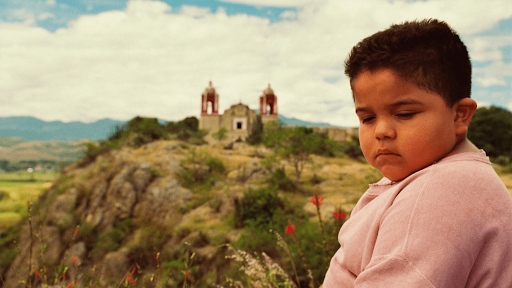
We’d all walk out of this piece warmhearted if I concluded with how NACHO LIBRE taught me to accept myself in the act of seeing myself, but let’s not stretch(y pants) the truth. In December 2007, Jonah Hill’s wardrobe in SUPERBAD changed my life because I learned that I could hide my love handles by layering button-ups over graphic tees, and then eight tortured years of ill-fitting wardrobe later, Action Bronson and Matty Matheson showed me a path towards XXL Fits To Eat Pussy In. Despite the obesity epidemic, Americans hate fat people too much for a movie to magically erase that insecurity. Oh my God, and outside the United States? Bro, forget about it, even belly-out Greek dudes would look at me like, “Alright, calm down on the pastries” when I trekked through Mykonos in 2018, and in 2006, a physically agile Jack Black was the gut-busting comedic foil to that same year’s greased-up Spartans from 300. In 2010, my freshman year Spanish teacher filled up two periods with a subtitled viewing of NACHO LIBRE, and my classmate Julia, a chipmunk-jawed competitive cheerleader whose claim to fame was backflipping in Taylor Swift’s “Shake It Off” music video, kept noting how funny Nacho’s nipples looked. I never even considered nipples could look funny. To this day I keep looking at Jack Black’s inverted nipples and think of her, in a similar way to how I observe Chancho’s gut or the stretch marks across Little Nacho’s tummy. Mine were gross scars, but here they lit Julia with delight. Beneath it all was maybe a disgust—a jiggly torso was the mockery of the rigid athleticism coached into her—but at least it got a smile.
In 2026, early 2000s fatphobia has not been this powerful since Dick Cheney officiated over the Oval Office. In 20 years, we’ve circled back to calling Jack Black’s luchador physique—look at the definition in his shoulders, the toned back, all the muscle that I’ve held up as a goal weight—”chubby.” Maxim Magazine builds have once again seized the crown from body positivity thickness, eating disorders are torpedoing the A-list until the chambers empty, and the golden age of fat asses clashes against an encroaching Bronze Age of silicon milkers and recreational liposuction. Botched buccal fat removal is clogging salivary glands, the emaciated cast of WICKED are on the verge of being psychiatrically withheld from public life, and looksmaxxing is transcending gender affirmation and instead shattering all preconceived scientific findings of the human species. Forget the death of the studio comedy, the growing tolerance for artificially generated imagery, and the continued white-washing of our popular arts: NACHO LIBRE seizes the day through its 86-minute portrayal of a real human body.
In 2007, I forced my cousin to take me to a matinee of THERE WILL BE BLOOD, where I was the youngest in the auditorium by three decades; this was a few weeks after my dad spent our walk past the Burbank Town Center’s merry-go-round silently contemplating if he really should’ve taken his 11-year-old to watch NO COUNTRY FOR OLD MEN. It all kicked off because HAPPY FEET captivated my whole family because of its polarizing, live-action finale, not in spite of it. It happened because of the eye-catching colors of the VOLVER poster, the realization that Pixar hit a quality-control snag with CARS, the way CLERKS 2 immediately prompted me to ask, “What’s CLERKS 1?,” and the excitement that the IDLEWILD trailer brought my friend Ian and the entire Black community of San Gabriel Valley’s Sierra Madre. I turned 30 this year, and with the immense gratitude of being around long enough to recall a life at the movies, there sits NACHO LIBRE, a movie I watched immediately after the last day of school in a half-empty theater where the cascading hoots of a cheering lucha libre crowd convinced me I was in the center of the ring. More meaningful than creating a world just for me, the cinema was introducing me to the larger one around me; around all of us, for centuries prior, and centuries to come. How could you not spend the next 20 years chasing that?
In celebration of 20 years of NACHO LIBRE, we’re throwing a cheer-along screening at Santa Ana’s crown jewel, the Frida Cinema, on June 20th!









Comments