

 By
By Thanks for clicking into our end of the year coverage! Merry-Go-Round Magazine is an independent culture site funded by people like you! If you’re enjoying our End of 2025 Coverage, consider becoming a member of our Patreon, or even donating to our operation here! Thanks in advance for supporting MGRM for the last 10 years! Cheers!
So here’s a big twist right out the gate: 2025 was terrific.
Okay, not in terms of stripped human rights, economic imbalance, climate catastrophe, or the death of the progressive project writ large, but if we are to judge a year by the pictureshows we guzzle our popcorn gawking at, then there was an embarrassment of quality excursions to your local cinema. The Warner slate—yes, SINNERS and ONE BATTLE AFTER ANOTHER, but even WEAPONS, MICKEY 17, and, shockingly, SUPERMAN—weren’t popcorn flicks you could pick and put down with the same reckless abandon as multiplex junk of yore. For the first time in the 2020s, a lot of rich wealth-hoarders got behind the idea of giving very smart artists a whole lot of money to make something for the widest possible audience. Everyone caught the bug. A24 gave both Safdies a collective $200 million for their solo projects while continuing to indulge Ari Aster even after BEAU IS AFRAID. A freshly Oscar-anointed Neon affixed their annual slate to ensuring a chilly Norse family tragedy, an Iranian dissertation on seeking retributive violence against the state, a feel-real-bad Spanish SORCERER, Chris Stuckmann’s Kickstarter haunt, a languid Brazilian collage, and a body-horror fiasco where Dave Franco’s cock gets Venus flytrapped by Alison Brie’s labia. Pixar even attempted a queer sci-fi romp, but Bob Iger’s fascist Disney sent that right back to the kitchen. Not everyone had free reign to produce what audiences have been practically screaming for, but those who smartly read the tea leaves are to thank for what felt like the healthiest film market since 2018. With historic mergers, acquisitions, and labor infractions on the near horizon, it’s a shame that’s all about to implode. 2025 was a cruel temptress—a taste of what we could have had. Perhaps, if we build it, we can replicate it.
To commemorate what may very well be the best year for movies of the decade, we’ve assembled a crew of critics, editors, and friends of the magazine to reminisce. And, if I, Kevin Cookman, can speak candidly as Merry-Go-Round Magazine’s Film Section Editor, I think this is the coolest list of recommendations we’ve cooked up this decade. Without further ado, we hope you enjoy our 25 picks for the best films of 2025!
This article contains spoilers for most listed films.
–
25. RESURRECTION
Director: Bi Gan
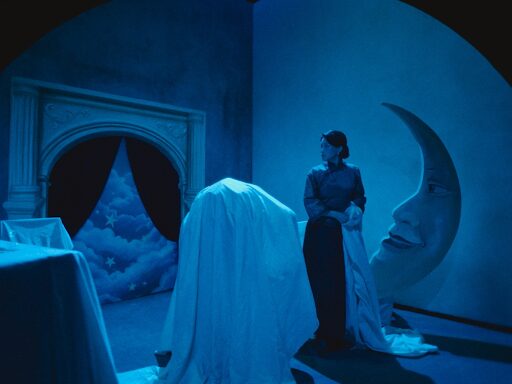
The premise of Bi Gan’s phantasmagoric odyssey, RESURRECTION, brings to mind BLADE RUNNER: In a world where humans have gained eternal life, but lost the ability to dream, those who still can dream are hunted down and eradicated. When a bounty hunter tracks down the last remaining “Deliriant,” she shows the monster mercy by allowing him to dream one more time. From that starting point, RESURRECTION turns into a tumbling, fluid, visual stunner which spans the 20th century and the history of cinema so far. The bulk of RESURRECTION is the four dreams, presented across four stylistically unique sections. Chinese musician and movie star Jackson Yee plays different characters—all criminals—at the center of each. The first dream is a surreal noir concerning a murder and a missing suitcase, the second is an absurd parable where Yee plays an art thief who unleashes a trickster spirit in a ruined Buddhist temple. The third is the most conventional: a PAPER MOON riff where Yee’s conman enlists an orphan in a scheme to rip off a mob boss. The final dream recalls the primary-soaked films of the Asian New Waves as Yee embodies a hoodlum who is vying for the attention of a mysterious gun moll, and showcases an impressive, extended oner that extends New Year’s Eve 1999. To dream is to cede control when you’re most vulnerable, and buying a movie ticket is an implicit agreement to submit oneself to another’s dream. Many movies won’t live up to these lofty expectations and many more fall into the chasm of memory. Still, the best—and some of the worst—will likely live in your mind for days, weeks, or even years and become as much a part of your personality as your name. RESURRECTION is a film for people who have ever had a dream they were in one of their Letterboxd Top Four.
The film’s title is purposefully enigmatic, yet apt. The first shot is of the screen burning and revealing a turn-of-the-century Chinese movie theater, the last moments are of luminous figures in a melting wax cinema. The spirit of the Delirient is resurrected time and time again through his dreams. That is, until he is lost forever and his dreams forever locked away. Leaving the theater, and in the weeks thereafter, whenever I’ve thought back to RESURRECTION, my feeling wasn’t mournful. More than most other movies I saw this year, it gave me hope for the future of the art form. It resurrected (ha ha) my love for movies and reminded me of their power. It is not novel to notice that our society has become more and more individualized and we have sacrificed shared experiences for algorithmically curated silos. Art is exploited by antisocial ghouls as simply data points to be fed to machines which will do our thinking and creating for us. These machines promise to deliver solutions which make us more productive, wealthier, and increase our longevity, but still cannot feed our souls. RESURRECTION evokes how film can be a shared collective history while still feeling personal. It reminds us how the things that make us human—our communal spaces and our dreams—are achingly fragile; how we blink into the world, dream, and slowly fade out. [Mason Maguire]
24. YES
Director: Nadav Lapid
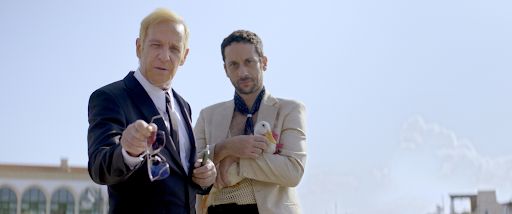
Plucked from the depths of Hell (read: Tel Aviv), Israeli director Nadav Lapid’s latest, YES, is a tough sell for pretty obvious reasons. If you are not a rabid purveyor of what I like to call “Evil Cinema,” then, frankly, you need not apply here: The accumulated gut reaction I’ve noticed towards Lapid’s cinema is an understandable apathy towards centering the Israeli perspective in the genocides they perpetrate, but should you harbor the patience required for a movie steeped in total disgust with each and every single one of your fellow countrymen as YES does, your venture into the belly of the beast will be handsomely rewarded. I mean, look at us, man. We’re dirty fucking Americans. If we can say that DR. STRANGELOVE is a defining achievement of the 20th century despite savage American conquest causing every single one of that movie’s and era’s paranoias, then I think at the very least that I can stomach a pitch-black Israeli polemic. Following the tribulations of a young-ish songwriter tasked with penning a post-October-7th national anthem while turning tricks amongst a clientele of elderly state officials, YES is a kaleidoscopic census of a paradise long lost. This is a film whose most optimistic note is that the death of Isreal is imminent, and it will be a suicide. It depicts the natural endpoint of cinematic fascism, wherein SALÒ has become a commodified lifestyle rather than a clandestine ritual, and in that total despair ends up achieving things with the camera that I have never seen done in my goddamned life. Legitimately hideous moviemaking, with a prolonged sequence set on a road trip to a vista of the Gaza ruins among the most despairing scenarios I’ve ever seen on a screen or otherwise.
It’s a whole lot of movie, rife with diversions that almost solely serve to mock the current tenor of the only democracy in the Middle East: The Israeli sex offender registry is so immense that YES manages to incorporate a refraction of the Mia Schem assault case (an ex-hostage reveals that she had been raped not by her Hamas captors but by a viral Israeli gymfluencer and personal trainer upon her return) before the accusation was even publicized. Pure coincidence that this movie’s gym trainer molestation subplot lined up with reality! I love being alive right now in this world! The entire experience is fueled by such aggressive mockery that you expect a post-credits scene of Lapid flying his own explosive-loaded paraglider over the adjacent McDonald’s and right into HaKirya. THE ZONE OF INTEREST is an easy comparison, but I need you to understand just how insane YES is, which is more like if THE ZONE OF INTEREST was made in 1941 by a Berliner. If that’s something you have no desire to wrestle with, then no worries, Nadav Lapid is already doing the grappling. [Kevin Cookman]

23. THE CHRONOLOGY OF WATER
Director: Kristen Stewart
Most actors will do everything possible to make themselves known in their directorial debut. They’ll play a juicy starring role, something that can get them an Oscar. Kristen Stewart has never been a typical movie star. She tried to fit the mold of a hetero romantic lead in TWILIGHT and was ridiculed by the masses. Since then, she’s largely endeavored to star in indie projects with little regard for what will be a crossover hit. She made PERSONAL SHOPPER, LOVE LIES BLEEDING, CRIMES OF THE FUTURE, and SPENCER because the roles moved her on a deeply personal level and allowed her to express herself with full authenticity. After a string of critical hits, she declared that she would no longer act until her directorial debut, THE CHRONOLOGY OF WATER, was finally able to be made. Alas, this adaptation of swimmer Lidia Yuknavitch’s memoir of her tragic, abusive past was willed into existence on a shoestring budget. Stewart never once appears in the film, entirely invested in sharpening her directorial craft. This shows in the audacious, experimental, and often overwhelming final product. This is not a film made for validation. The structure is unorthodox. The violence is horrific. The catharsis is messy. However, those who are willing to swim in these treacherous waters will discover what I believe will be regarded as one of the best films of the 2020s as history unfolds. Lidia’s story unfolds in a nonlinear, often dreamlike string of indignities. We watch as her father abuses her both physically and sexually. We see a drug habit start to take shape. Swimming is an attempt to cope with the pain, but it never quite takes. She takes up writing, eventually receiving positive feedback in a workshop run by Ken Kesey (Jim Belushi), but she’s incapable of forming a deeper bond with friends or romantic partners. It is unflinching, but somehow tasteful. It is more about the sheer quantity of Lidia’s trials than any one specific thing being her breaking point, and an exhausting, 128-minute experience that often left me feeling punch-drunk.
I’d liken Imogen Poots’ revelatory performance to Gina Rowlands in A WOMAN UNDER THE INFLUENCE in terms of the level of sheer crushing pain she has to express, often without words or with only a few seconds of screentime to do so. Rose Byrne and Jesse Buckley are receiving similar accolades this year for performances in this vein, and deservedly so, but Poots’ work is on another level. It is a complicated, subtle performance that fits a film that is often hard to fully process. Kristen Stewart has said that, “I need 10 people to help make this movie with me in Los Angeles, and all the actors are my friends, and I don’t need to make any money—we can make it for absolutely nothing in four-to-six weeks. We will make this in the dead of night and nobody will know it. Fucking try to shut us down—absolutely not!” This is the rebellious spirit that makes THE CHRONOLOGY OF WATER such a triumph. She didn’t wait for A24 or Neon to cut a check and give their two cents on her vision. She only took guidance from Lidia’s words. That’s a level of passion, audacity, and authenticity that Hollywood cannot break, try as they might. [Michael Fairbanks]
22. THE TOXIC AVENGER
Director: Macon Blair
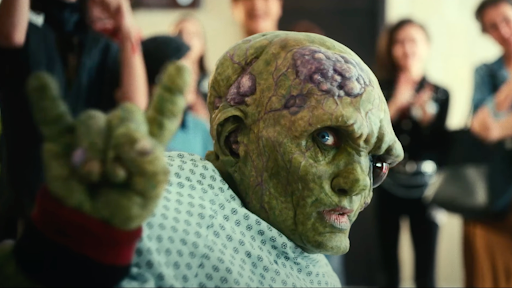
I wrote a full review of THE TOXIC AVENGER as part of a longer article published back in September on this very site, and I don’t have much more to say about it now. I would, however, like to acknowledge the millions of dollars of medical debt this film erased with part of its marketing budget. It’s inspiring that a good movie made by good people can save lives, depressing that this is necessary in the first place, and fitting that the other big headline about this film was Toxie’s titanic dingaling. I’m so sick of Hollywood’s impossible beauty standards. [Dan Blomquist]

21. AFTERNOONS OF SOLITUDE
Director: Albert Serra
AFTERNOONS OF SOLITUDE is a visually impressive meditation on what it means to document the spectacle of lethal violence via a series of long zoom shots that witness the brutal deaths of bulls in the Spanish ring, over and over and over again. Vegans and the squeamish: beware. What’s even more impressive is Albert Serra’s refusal to take a clear stance on the material, neither glorifying nor condemning the cruel, politically conservative institution of bullfighting. However, what I love most about Serra’s documentary following the daily life of Peruvian bullfighter Andrés Roca Rey is that it is ultimately a movie about putting on your most fire fit and getting hyped up by your boys. In lieu of traditional interviews with Roca Rey, we are only presented with impartial, static shots of his entourage helping him get dressed in his flamboyant matador costume—hyping him up before and after bullfights—with the unspeakable violence scattered in between. He may have men constantly lauding him for his huge pair of balls, but these shots, framed with the matador in the middle, give the impression that Roca Rey is utterly alone. These shots parallel close-ups of the faces of the bulls that he fights, possibly alluding to their similarities. They both exist in a kind of prison. Who is Roca Rey, and why did he become a bullfighter? What makes one performance good, another bad? Serra is simply not interested in these questions. He would rather interrogate why we as viewers are so taken with, and simultaneously repulsed by, the aesthetic of extreme violence through repetition. I would be remiss to not mention that my favorite piece of criticism published in 2025 was a piece on this film, “Animal Magnetism” by Erika Balsom for Film Comment. [Katarina Docalovich]
20. WAKE UP DEAD MAN
Director: Rian Johnson
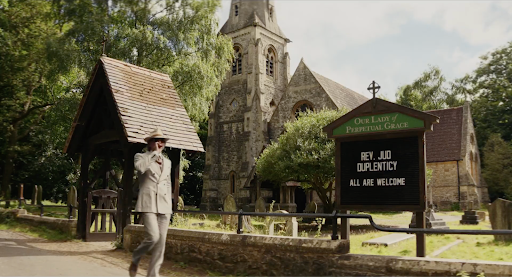
It still bothers me that they decided to subtitle the sequels of Rian Johnson’s series of whodunits “A KNIVES OUT Mystery” instead of “A Benoit Blanc Mystery.” KNIVES OUT isn’t the recurring piece in these films: It’s Daniel Craig’s Foghorn Leghorn-sounding Detective Blanc that’s the centerpiece to solving each mystery. Show a little respect to the director of the second-best STAR WARS film! But I digress. WAKE UP DEAD MAN is thematically darker than the previous entries in the series, but a mystery that feels more worthy of being connected to the KNIVES OUT name than the uneven 2022 sequel, GLASS ONION. DEAD MAN explores faith, death, power, and morality. You know, all the fun stuff! I particularly enjoyed that much of the story was focused on and carried by Josh O’Connor’s compelling performance as Father Jud. I really wondered where they found this up-and-coming actor I hadn’t seen on screen before. (It turns out that I should, in fact, finally watch CHALLENGERS, among a few others I’ve passed over the last couple of years.) Overall, there’s another stellar cast lineup, another film where Johnson gives us an interesting spin on the whodunit formula, and another great Benoit Blanc Mystery! [Jack Probst]
19. EDDINGTON
Director: Ari Aster
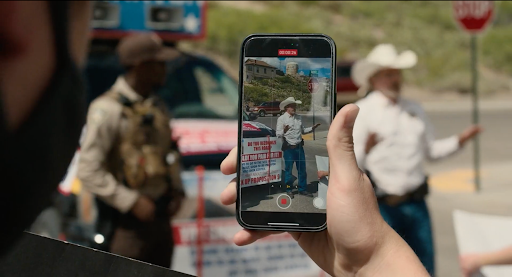
Before I saw EDDINGTON, I read that it was John Waters’ favorite movie of the year, and while I don’t believe in many gods or deities, I do believe in the campy gospel of John Waters. I walked into the theater with that fact tucked into my back pocket instead of bracing myself for another heart-stopping trauma spiral like HEREDITARY, or the sustained anxiety attack that was BEAU IS AFRAID. Thank God. That framing changed everything. What had been pitched to me as a seething retrospective of the pandemic years wrapped up as a modern Western ended up delivering some of my biggest belly laughs of the year and some of the most catharsis I’ve felt from a film in a long time. Look, pandemic trauma is real. It’s still raw, but EDDINGTON works precisely because we’re still in the thick of it, even as parts of surviving the pandemic already feel cartoonish in hindsight. Mask mandates in vast desert plains. Moral panics. Online crusades. Wellness cults. Algorithmic, conspiracy-driven outrage. EDDINGTON looks us dead in the eye and says, “Yeah, you’re in this too.” The pandemic marked the beginning of the end of whatever passed for normal, ushering us into the full-blown circus we’re still trapped in here in 2026. It’s all types of whiplash, but the tonal chaos of EDDINGTON is the point. We no longer live in a subtle era. Everything is exaggerated, performative, loud, and algorithmically amplified.
The movie being “on the nose” isn’t a failure of nuance: it’s realism. This is a film made for a world where irony is dead, and sincerity is immediately weaponized. In the world of EDDINGTON, the point is not that “both sides are bad,” but something far more unsettling: Both sides have some truth to them, just not in the ways they think. And more importantly, they’re arguing at the wrong scale. Everyone is so busy proving they’re morally correct that they completely miss the forces quietly eating their town alive. Solidgoldmagikarp, the name of the giant AI data center descending on Eddington, is the centerpiece of it all. For the non-Pokémon nerds: Magikarp is famously useless. It flops around. It does nothing. A creature that’s underestimated precisely because it looks harmless and stupid. Until—surprise—it evolves into one of the most powerful, destructive forces in the entire game. If that isn’t the most perfect metaphor for big tech, AI infrastructure, and capital consolidation quietly hollowing out communities while everyone else screams at each other online, I don’t know what is. While everyone is busy fighting culture wars, the machine just keeps getting built. It’s the kind of viciousness you get from someone like John Waters. And I’m telling you: That man is always right. [Lauren Chouinard]
18. THE SECRET AGENT
Director: Kleber Mendonça Filho
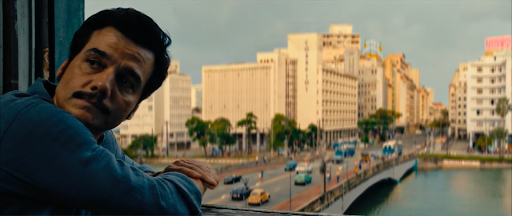
Armando Solimões (Wagner Moura) pulls into a gas station early on in Kleber Mendonça Filho’s THE SECRET AGENT. While he’s waiting for the attendant, the camera tracks from his car to a body over in the dirt not far from the pump covered in cardboard. Armando soon learns that the deceased had the misfortune to try and steal from the gas station and the attendant—now pumping gas into Armando’s car—had no choice but to kill him. The police have not been able to retrieve the body due to the carnival holiday, but as Armando listens intently to the story, a patrol car arrives. The officers seem less concerned with the body in the dirt and more with harassing Armando, barely leaving him be until he bribes them with cigarettes. As Armando drives deep into the Brazilian countryside, and eventually into hiding in the city of Recife, THE SECRET AGENT has kept you askance, paranoid, and hooked. Despite its title, THE SECRET AGENT is not a film about a spy. Yes, Armando is living a clandestine life, but he is a private citizen: a former professor and a widower who ran afoul of a powerful energy executive. The executive has put a hit out on Armando, who takes on an alias “Marcello” and works in a government identification office. While on the job, Armando looks through files for information about his mother, a peasant woman, of whom he has few memories. Elsewhere, the grotesque police commander Eucledies and his two sons move a disembodied leg– pulled from the stomach of a tiger shark—around the mortuaries of the city, and Armando’s young son Francisco yearns to see JAWS.
THE SECRET AGENT is discursive and shaggy, not unlike a half-remembered story pieced together long after the fact. The production and period recreation merits recognition, but it’s the film’s tone—akin to a Delirient’s lucid dream of 1970s cinema—that makes the film resonate long after you leave the theater. In fact, THE SECRET AGENT may be the one film from last year that is more in love with the movies than RESURRECTION. But while Bi Gan’s film floats and revels in artifice, THE SECRET AGENT is considerably more grounded. Even the film’s most absurd sequence is something that actually happened. Or, rather, something that was actually reported in the Brazilian press. Paradoxically, obfuscation is sometimes the only way the truth can sometimes be revealed. Crucially, it is not the only way. I saw the film the day that Renee Good was murdered by I.C.E. agents, and I’m writing this blurb the day after Alex Pretti’s execution. These were two people—among many many others who were disappeared by our government—with lives, loved ones, and histories. They’re more than what they saw on a screen or posted about in 2020. In its last moments, THE SECRET AGENT invites a comparison between the cinema and centers for healing: the same lot has existed as a theater and a health center. Crucially, Filho does not pander and consider art a panacea. It is about how recorded history cannot truly make up for lost time, or time never had at all. It’s vibrant, vivacious, and rich while being deeply sad. Perhaps most importantly, it has Dona Sebastina. How many other movies can boast that? [Mason Maguire]
17. SPLITSVILLE
Director: Michael Angelo Covino
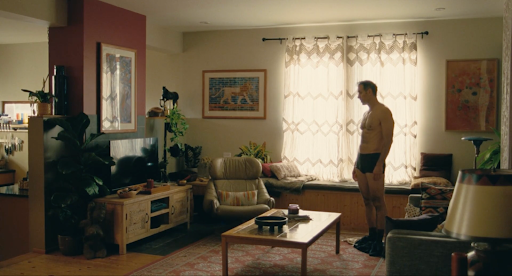
A truly modern movie about open marriages and polyamory is a minefield of handwringing high-horse bullshit pulled from the depths of exhaustive Reddit posts and Twitter threads, but by the time Carey (Kyle Marvin) and Paul (Michael Angelo Covino) get into an outlandishly LOONEY TUNES-esque fight roughly a half-hour into SPLITSVILLE—breaking and destroying everything and anything in sight throughout a several million dollar home—the film has already earned the title of best screwball comedy of the year, doing so far from the online thinkpieces that could’ve derailed it. Perhaps the best-shot comedy of the last 10 years, the camera work in the film is something to be studied; big slapstick performances, quiet background bits, and slow-to-reveal sight gags are marvelously framed by THE STUDIO alum Adam Newport-Berra. Enhanced by a script filled with cheeky puns, one-liners, and deadpanned stoicism, not to mention some of the best male nudity in a film since FORGETTING SARAH MARSHALL, Covino (who also wrote and directed the movie) brings a heartfelt, joke-a-minute touch to a film that reveals new subtle hilarities each time you watch it. [CJ Simonson]
16. BLACK BAG
Director: Steven Soderbergh
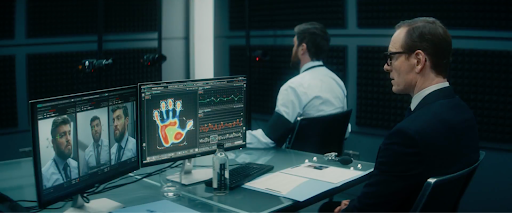
BLACK BAG would’ve deserved recognition on this list solely for the beautifully photographed homes and office spaces, not to mention Cate Blanchett’s stunning outfits, but fortunately beyond those aesthetic bonafides, Steven Soderbergh is back in his bag (pun intended), delivering a stylish, taut 90-minute spy thriller that taps into the sexy tension of some of his best popcorn films. The dinner sequences alone, which find married agents Kathryn (Blanchett) and Michael (Michael Fassbender) hosting a cat-and-mouse game to sniff out an internal leak within the NCSC, are some of the most richly entertaining moments within any Soderbergh film of the last 20 years. A director whose feverish output is something to marvel at even if its recent yield has been a roller coaster of ideas and quality (see: his other 2025 film PRESENCE), it’s refreshing to know he can still deliver a tightly wound, Swiss watch thriller with seeming ease. [CJ Simonson]
15. FRIENDSHIP
Director: Andrew DeYoung
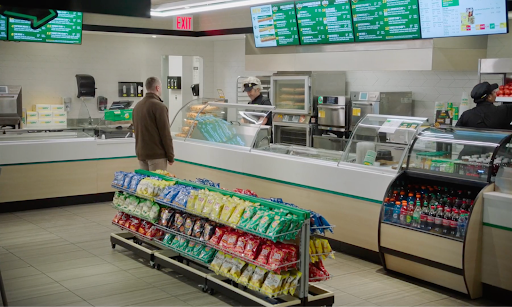
We used to yell things in this country. The current drought of studio comedies has drained our collective reservoir of funny quotes: No longer can our nation’s proud party animals bank an easy drunken chuckle off of Will Ferrell’s blood, sweat, and tears. Every day, countless jokes crash against the jagged rocks of cultural fragmentation, their bloody fingers grasping for connection, then slipping away on cold nods of feigned laughter. Is this the end of the sick reference? Or will some brave, quirked-up white boy save his brethren from the tyranny of “What’s that from?” I don’t know. All I know is that we should still be in Afghanistan. Tim Robinson mastered the role of socially maladroit oddball long before FRIENDSHIP, but this film is more than an extended I THINK YOU SHOULD LEAVE sketch. Robinson’s awkward marketing executive, Craig Waterman, can be read as the connective tissue between his ITYSL characters and Ron Trosper, the protagonist of his HBO series THE CHAIR COMPANY. ITYSL Robinson has no time to establish motive; we take for granted that he’s someone who can’t leave well enough alone. THE CHAIR COMPANY fully realizes the Robinson character, a man torn between sincere love for his family and the call of an absurdist void. Craig lacks Ron’s charisma and competence, but his urge to belong grants him a depth beyond the standard sketch wacko. An evolution beyond pure second-hand embarrassment, Craig elicits a sympathy that proves Robinson sees the bleak reality that forces men to crash their hot dog cars. Yes, Craig shouldn’t have sucker-punched Austin. He shouldn’t have taken Tami to the sewers beneath city hall. Holding a house party hostage at gunpoint is decidedly a faux pas. But everybody needs friends. Would you judge a starving man for stealing bread? I saw FRIENDSHIP in a packed theater with the largest crew of friends I’ve been able to assemble since graduating college. The audience laughed often, laughed loud, and perhaps most surprisingly, laughed exclusively after hearing a joke. If Hollywood wants to get serious about tackling the collapse of the theatrical release—and the male loneliness crisis, while we’re at it—they should give Tim Robinson a blank check. If not, I hear there’s a new Marvel out that’s supposed to be nuts. [Dan Blomquist]
14. THE NAKED GUN
Director: Akiva Schaffer
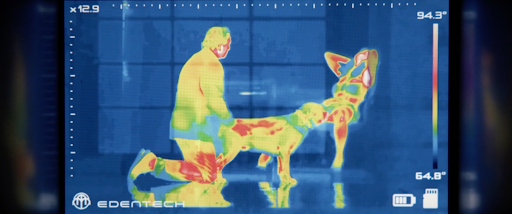
Like so many kids born in the ‘80s, I saw the original NAKED GUN—starring the brilliant and extremely late Leslie Nielsen—when I was much too young. Generally, this is the best way to introduce someone to absurdist comedy; you’re nice and impressionable, you don’t get all of the adult jokes, but you just enjoy laughing along with everyone else watching, and you definitely know it’s pretty cool that you’re seeing it. My uncles were guilty of sitting me down to watch some of the genre’s greatest movies on VHS and LaserDisc, the kinds that shape your funny bone forever. Movies like THIS IS SPINAL TAP, YOUNG FRANKENSTEIN, MONTY PYTHON AND THE HOLY GRAIL, and PLANES, TRAINS AND AUTOMOBILES brought them so much joy that they had to share them with a silly kid who had a tendency to double over with laughter to the point where he would struggle to get any air in his lungs at even the most subtle of jokes.
I have literally been waiting years for this new NAKED GUN, and the idea that Liam Neeson would star was just a rumor. Even if the film ended up being complete trash, casting Liam Neeson because his name is easily confused with Leslie Nielsen was a solid-enough goof to make me happy. Luckily, Akiva Schaffer of the Lonely Island delivered a solid tribute to classic Zucker-Abrahams-Zucker films. Neeson plays it silly, a performance that tends to lean into the more self-aware humor of the NAKED GUN sequels, rather than Neilsen’s more serious delivery that made the original so goddamn perfect. His chemistry with co-star Pamela Anderson, an icon of ‘90s monoculture, is weirdly electric, and she’s given stupid joke after stupid joke that she expertly pulls off. I literally took a day off work to see this movie with a crowd; I tend to laugh with my whole body, so I really tried to keep my volume set to a low giggle, so as not to. But once the love montage involving a snowman started, I completely lost my shit. Sure, THE NAKED GUN may be a dumb movie, but it’s all the right kinds of dumb. We need to support studio comedies when they’re in theaters, and not let them get buried on some streaming service that might delete them from existence at any time. Plus, this country is so fucked up, and we face new horrors on the reg. It’s obvious what would heal everyone. I’m not a doctor, nor do I play one on TV, but I’m gonna go ahead and prescribe you 90 minutes of non-stop laughter, even if your insurance doesn’t cover it. [Jack Probst]

13. THE SHROUDS
Director: David Cronenberg
Much ink has been spilled over which filmmaker has properly risen to meet our current digital moment, but for my money, the one whose stylistic preoccupations best reflect the absurd sleekness and teeth-rotting grief of life in the 2020s is David Cronenberg with THE SHROUDS. In his most personal film to date, Cronenberg covers so much ground—both new and familiar for him—that the film greatly rewards rewatching. In an age when 19 percent of Americans are pursuing AI romantic interests, THE SHROUDS has much to reveal to us: designer shrouds paired with digital headstones that allow one to watch the decomposition of dead loved ones (a potential vision of a not-so-distant future?), a sexy AI assistant hacked by a jealous, schizophrenic conspiracy theorist, naked mangled bodies, and the best sex scene of 2025 between grieving tech overlord Karsh (Vincent Cassel) and his dead wife’s twin sister (Diane Kruger). Who else remembers when people on the Internet were accusing Cronenberg of making the film solely to sexualize his own dead wife of 43 years? What an ugly, bad faith reading of this film that was. If my imaginary filmmaker husband doesn’t create a beautifully spooky, but also sexy, homage to me after I die, hasn’t this all been for nothing? THE SHROUDS ultimately persists in my mind not only for its prescience and its sexiness, but also for the difficult questions Cronenberg is unafraid to put forth and not solve. What is grief if not a vast conspiracy laden with unanswerable puzzles? What the hell happened to Maury’s fingers? And how did Jerry Eckler’s body appear next to Karsh’s dead wife’s body in the cemetery? I do not know the answers, dear readers. What I do know is that one day, we will all be together in Grave Tech Budapest. And we can take comfort in that. [Katarina Docalovich]
12. SENTIMENTAL VALUE
Director: Joachim Trier
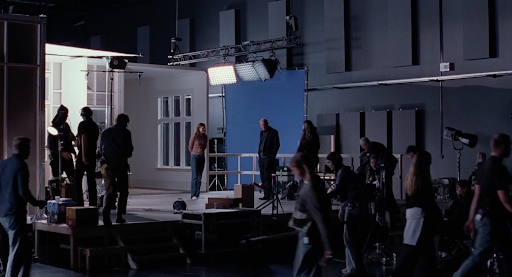
Detractors often compare the films of Joachim Trier and co-writer/collaborator Eskil Vogt to IKEA furniture: sturdy Nordic structures that are modest compared to the stately work of their chief influences. Their latest venture into the halls of Ozu and Bergman, SENTIMENTAL VALUE, centers a house, in this instance a 100-year-old dragestil Victorian Oslo abode. Perhaps even spookier than your typical haunted house, bearing the weight of generational trauma and grief held for umpteenth years, manifesting the fractured family dynamic at the film’s core in its very walls, echoes of previous decor and lives lived retold via montage and flashback. It’s all built on the foundation of two decades of collaboration between Trier and Vogt, and four stellar performances that have each been duly recognized by the Academy and Cannes alike. Coming off of 2021’s bittersweet tragicomedy THE WORST PERSON IN THE WORLD—the third in Trier/Vogt’s “Oslo Trilogy”—SENTIMENTAL VALUE likewise centers on Renate Reinsve as Nora Borg, a stage actress suffering from the recent death of her therapist mother Sissel. Nora’s depression and chronic stage fright is exacerbated by the presence of her younger sister Agnes (Inga Ibsdotter Lilleaas)—whom Nora cared for after their parents’ divorce—and the re-emergence of their father, the haughty and celebrated film director Gustav (Stellan Skarsgård). Gustav returns to Norway to reclaim the sisters’ childhood home, which has been in the Borg family for decades. While there, Gustav presents Nora with a script inspired by her grandmother’s life and death and tells her he wrote it with her in mind to play the lead character, and what ensues is a series of cool rebuffs, dejected recollections, and square pegs in round holes.
This heavy framework gives form to the rest of the film’s plot, enhancing the chilly distance between the central characters and the gingerly steps they take to reach something of a middleground reconciliation. The leads’ exemplary performances are highlighted by subtle facial expressions, body language, and microaggressions that speak volumes; each character’s perspective and narrative throughline is interwoven in emotionally complicated and resonant ways. Even the cuts to black signal act breaks like a curtain closing onstage. Art as a means of self-expression and self-actualization through artifice is mirrored in both Nora’s detachment from her emotional environment and escapism via her theatrical work, while Gustav resolves his familial trauma and abandonment of his children by casting his family in films that attempt to emotionally compensate for his lack of empathy. Agnes—a historian and researcher—looks into her family’s history to try to understand Gustav’s perspective, but is duly reticent to allow Gustav to cast her young son Erik in his film, having worked with her father previously as a child actress herself. All of this, and there’s a B-plot about Netflix’s production meddling, and at least two darkly humorous asides about IKEA stools and gifting a young boy IRRÉVERSIBLE and THE PIANO TEACHER on DVD. [Luke Phillips]
11. FRANKENSTEIN
Director: Guillermo del Toro
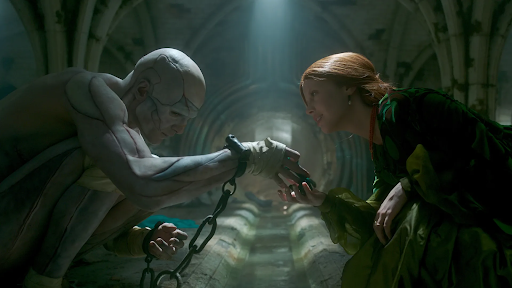
There are few stories as culturally overexposed and as fundamentally misunderstood as FRANKENSTEIN. Generations of adaptations have reduced Mary Shelley’s novel to a creature feature of lightning, bolts, and a madman playing God. But Shelley was never writing about a monster. She was writing about responsibility. Guillermo del Toro’s FRANKENSTEIN stood out to me so powerfully not only because it is a stunning visual experience (as all of his films are), but because it is the closest a screen adaptation has come to honoring Mary Shelley’s original warning. My ninth-grade English teacher would be very proud. Shelley conceived FRANKENSTEIN at 18, after a nightmare in which she imagined a creator recoiling in horror from what he had brought to life. That recoil is the emotional center of the story. Doctor Frankenstein does not become monstrous because he creates life; he becomes monstrous because he abandons it. This film captures that truth most clearly through Jacob Elordi’s remarkable performance as the Creature, who is neither a rampaging villain nor a sentimental victim, but an intelligent, painfully self-aware being forced to understand himself through society’s cruelty. Likewise, Oscar Isaac’s Victor is not a cartoon mad scientist, but rather an egotistical man convinced that his noble intentions excuse devastating consequences—a cautionary figure Shelley warned us about long before the age of modern technology.
What makes this film truly sing isn’t its moments of rage or terror, but its quiet acts of kindness. The Creature’s tender interactions with Elizabeth, played with soft strength by Mia Goth, or the way he secretly protects a rural family from the shadows, offering them the unconditional care he himself never received, are among the film’s most affecting moments. Watching someone who has been so deeply rejected still choose gentleness, stillness, and compassion toward strangers brought me to tears. These scenes are a powerful reminder that even those treated with profound cruelty are capable of immense kindness. What makes this FRANKENSTEIN adaptation feel so urgent is how contemporary Shelley’s ideas remain. We live in a world defined by unchecked creation—AI technologies, systems, and institutions built without care for who they abandon or harm. Shelley’s question echoes louder than ever: Just because we can, does that mean we should? [Lauren Chouinard]
10. NO OTHER CHOICE
Director: Park Chan-wook
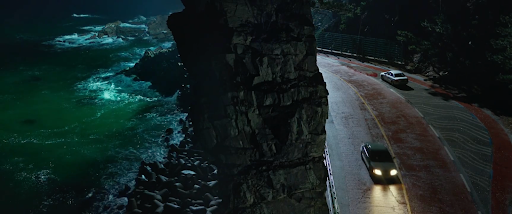
A great poet once said, “work sucks, I know.” Mr. DeLonge’s words scored many of my school dances and jogathons, but my fellow suburban tweens and I didn’t realize we were hearing gospel. Work indeed sucked when ENEMA OF THE STATE released in 1999, and the subsequent decades have seen the sucking intensify exponentially. The scarce protections of minimum wage jobs have fallen through contract work loopholes. Middle class offspring crave the grey office jobs they spat upon last century, if only to find reprieve from winner-take-all digital scamming industries. Artificial intelligence rests atop that pile of scams, its uncanny oil oozing down into the casinos and cryptos holding it aloft. As the tide rises, as we scramble and claw to grab the last vestiges of safety, Park Chan-wook asks his audience the relevant question: Would you kill so that you could live? Not because you want to, but because you have … Zero alternative? Lack of different options? Can’t do anything else? Something like that.
NO OTHER CHOICE is a movie about a man who defends his property, his family, and himself; an exemplary depiction of American values that scores yet another point for the “one country called capitalism” theory of politics. Yoo Man-su’s targets chose to threaten him when they became more qualified for paper mill jobs, and suffered entirely justified consequences. Really though, the hopelessness behind Man-su’s murderous campaign endears him to the audience just as much as his precocious children or the wobbly slapstick of his homicide technique. But the struggle for survival cannot produce a purely heroic figure. Chan-wook strikes a balance that denies us an obvious rooting interest. Man-su’s motivations range from the basic human needs of food and shelter to less-admirable feelings of emasculation and jealousy. Plugging kind-hearted shoe salesman Ko Si-jo in the gut erodes any moral ground Man-su could stand on, but his subsequent strangling of Choi Seon-chul—the middle manager who gleefully denied Man-su a job—wins back anyone who’s ever heard an echo of mocking laughter while reading a form rejection letter. The maelstrom of murder, manipulation and marital strife clears by the end of the film, because it never mattered if what Man-su did was right or wrong. It worked. He gets hired, saves his marriage, returns to his home, gets his dogs back, wins the war of survival once and for all. The paper industry won’t abandon him a second time. We leave Man-su bellowing a triumphant yawp, the lone fleshbag amongst his metal coworkers. It’s the happiest ending we’re allowed to have. [Dan Blomquist]
9. PEE-WEE AS HIMSELF
Director: Matt Wolf
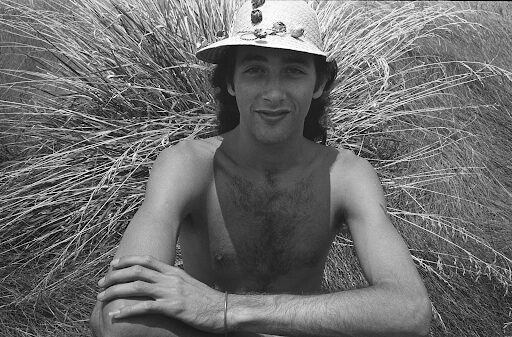
Before I even understood films, or art, or anything really, I understood Pee-wee Herman. PEE-WEE’S BIG ADVENTURE has been my sentimental favorite film since I was four years old, Pee-wee an even more brazen and impetuous smart aleck than Bart Simpson or Kevin McAllister—my two other major heroes. While I was too young to be cognizant of it, Pee-wee’s whimsical Playhouse and wider world introduced me to high camp, kitsch, esoterica, and alternative culture writ large. Despite his arrests reducing him to a punchline and recluse, I relished any pyrrhic comeback he mounted in the public eye. When Reubens passed away in 2023 after years spent battling cancer, I was devastated. Having partaken in countless rewatches of BIG ADVENTURE and the five seasons of PLAYHOUSE, their legacy as sublime entertainment for children and adults alike remains unsullied. Matt Wolf’s extensive documentary on Reubens, PEE-WEE AS HIMSELF, is an exhaustive portrait of his inner world, and all of the complexities, contradictions, and desire for control therein. From the outset, Reubens’ talking head segments are impish but exacting, as Paul makes plain that he can relinquish the documentary for his own devices as he wishes, creating a combative and sometimes tense rapport with Wolf. Reminisces on Reubens’ early childhood love of the circus, bohemian schooling at CalArts, his initial Groundlings work, and creative partnership with Phil Hartman are interspersed with intimate revelations, including Paul opening up about his relationship with Guy Brown, his live-in romantic partner in the ‘70s, who inspired some of Pee-wee’s mannerisms. Reubens became closeted in the ‘80s as his career took off and remained so for the rest of his life. Subsuming the Pee-wee persona—it’s revealed—was a calculated, conscious effort to court fame by obscuring his personal life so that the persona lived as a veritable museum of pop culture ephemera, toys, and counter-culture art (like the eponymous Playhouse itself).
Pee-wee’s pop cultural phenomena was a panacea for the Reagan ‘80s, a mutant strain of whimsical queerdom that was celebratory even at its most puerile. He had a penchant for seeking out likeminded artists and developing personal and professional relationships with them: Gary Panter, Mark Mothersbaugh, Cyndi Lauper, Elvira, et al. Simultaneously, Reubens’ desire for total creative control and oversight on his projects put him at odds with collaborators, from falling out with Hartman to the several aborted Pee-wee films that never materialized after the failure of BIG TOP PEE-WEE. It’s a minor miracle that he was able to stage a Pee-wee revival on Broadway and produce PEE-WEE’S BIG HOLIDAY for Netflix a decade ago at all. I was struck by how much I related to the young Reubens, a boy perfectly content to put on shows for his family and dreaming of joining the circus. In contrast to the infractions that the carceral system kept trying to pin on him, Wolf’s portrait divulges a rich interior life amongst his family and friends—beloved by his lesbian civil rights activist sister, nieces, and caring for his terminally ill father amidst the scandals. Would we all be so lucky to essentially have a lavender marriage with Debi Mazar! Reubens finally relents to Wolf’s vision only during a harrowing recording form his deathbed wherein he makes an impassioned plea regarding his legacy, stressing that he is not a pedophile and how damaging that labelling was as a refutation of his life’s work. It is a gigantic bummer and difficult to stomach. PEE-WEE AS HIMSELF is a thorny depiction of a brilliant whizkid who burned bright when the spotlight was on him, but also showcases how the Luckiest Boy in the World fares when the monkey’s paw curls. [Luke Phillips]
8. 28 YEARS LATER
Director: Danny Boyle
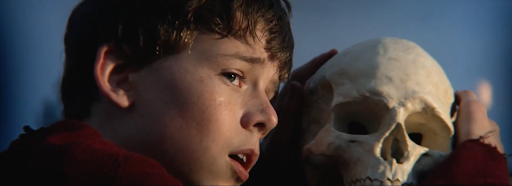
We will never recover from COVID. Not fully. People are not wired to process that level of collective death. Future generations will be raised by those who are marked by that trauma. No film in the years since has reckoned with this dynamic more potently than Danny Boyle’s 28 YEARS LATER. Most post-apocalyptic fare takes place shortly after the disaster has happened—the survivors still have some semblance of hope that the old world can be restored—but here, progress taunts the residents of the British Isles. Europe rebuilt after the zombie apocalypse that spawned when a monkey contracted the rage virus in 28 DAYS LATER. It was decided that it was better to quarantine the remaining survivors than to save them and that was that. They are condemned and yet must go on. Boyle realizes this decaying world through unnerving, deep-fried digital photography. Anthony Dod Mantle shoots with iPhones and never tries to hide it: The zombies often overpower the frame, and the image can barely keep up as they swarm in the nude towards our leads. When they’re killed, there’s a jarring camera trick employing a 20-iPhone rig that distills the minor victory of each kill.
The elements are just as threatening as the undead. The causeway back to our characters’ safe island is submerged by high tide. The zombies have an easier time crossing it than our characters do. It is an overwhelmingly threatening film, but humanity persists. Teenage Spike learns that his survivalist father isn’t the faithful breadwinner he portrays himself to be; his mother is sick, although the cause is unclear. She’s simply delirious, but who can blame her? There’s a neighboring man who is rumored to be a doctor, but he lives in a massive temple surrounded by human bones, so the jury is out on if he is trustworthy. Regardless, Spike endeavors to step up and try his best to help his mother, not because the mission has a hopeful outlook, but because her life matters regardless. This humanist sensibility is felt throughout the entire franchise. It is more urgent in DAYS as we watch our characters reckon with the fall of civilized society. It is more optimistic in THE BONE TEMPLE’s re-invention of Frankenstein and his monster dynamic. It is most at peace here in YEARS. It seems as though the only thing that is under Spike’s control is the way that he decides to move through the world. [Michael Fairbanks]

7. IT WAS JUST AN ACCIDENT
Director: Jafar Panahi
After a decade of smuggled Jafar Panahi movies shot on DSLRs, iPhones, and GoPros, I was unbelievably moved by the form of IT WAS JUST AN ACCIDENT. To put it in the most basic terms: It feels like a movie. A diverse ensemble of players, set-ups with home-run punchlines, nailbiting set pieces, and even a giggly undercurrent of pitch-black humor, I mean, that’s a movie! This totally sounds like patronizing acclaim, but you have to understand how Panahi’s been forced to move by the Iranian government. Since 2011, he’s been forced to be the star of his off-the-grid dramas, utilizing a semi-mockumentary format for these humanist self-portraits that prioritize his fellow countrymen: Watching the last decade of Panahi’s cinema is being introduced to the whole block, every granny and local freak on it. They’re somber, but they are ultimately playful examinations of a land he refuses to abandon. Not once does the director appear in IT WAS JUST AN ACCIDENT, but Panahi at his most impersonal still generates the empathy and gentle ferocity signature to his voice.
In fact, the ferocity is markedly less gentle here, the film’s gaggle of political prisoners taking to the streets to determine without a shadow of a doubt that the man they’ve abducted to bury alive in the desert is in fact the torturer who made a meal of them in prison. A taut, patient, at times agonizingly tense social thriller not unlike any other arthouse genre fare from its distributor Neon’s catalogue, the Iranian maestro’s guerrilla techniques reach an apex here. I have zero clue how you make this movie without the local officials shutting you down. The film is an apt piece for the latter half of the 2020s, a moral tale about political resistance released during one of the government’s bloodiest retaliations against its own citizenry. Valiant rage without the balance of compassion is just continued violence. Will we be a nation of dogs, or a nation of men? Either way, the world freezes over when we hear the squeaky winch of our master’s footsteps. [Kevin Cookman]

6. EEPHUS
Director: Carson Lund
Carson Lund, the writer and director of EEPHUS, is in his early 30s, but you’d be forgiven for watching this year’s slow-burn crossover indie hit about the final baseball game played on a public ballfield in late-‘90s New Hampshire and assuming him to be a much older gentleman. Maniphesting nearly 15 years of Brad Pitt whimsically muttering, “How can you not be romantic about baseball” into one leisurely paced 98-minute movie, EEPHUS is as much about baseball as it is about grieving. By the end of their final game, neither the remaining men from the Adler’s Paint or the Riverdogs know how to put into words the importance of the baseball diamond closing—all they know is they have to finish the game. Every passing year is marked with important cultural institutions closing down, being priced out of existence, or sold for parts by private equity firms. Bars I used to go to, shops I used to frequent, and sure, parks I used to hang out in, each now distant memories replaced at the whims of capitalism without proper explanation. Lund captures a group of men all trying to process this loss through a lens of active nostalgia. The field, this game, the relationships made playing it—they must’ve meant something … Right? Baseball or not, I think we can all relate. [CJ Simonson]
5. MARTY SUPREME
Director: Josh Safdie
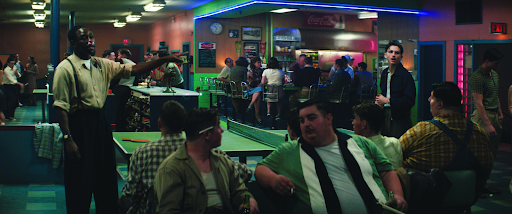
When I tried to explain what MARTY SUPREME was to friends who hadn’t seen it, I realized it was easier to explain what the film isn’t. Is it a biopic? Loosely. Is it a sports movie? Technically. Is Timothée Chalamet a heroic protagonist? Sure … Except, you’re not going to like him. Is it inspirational? Yes, and also absolutely not. Watching Marty is like tracking a ping-pong ball mid-rally: You can’t look away for a second because the next move is always coming too fast and reckless. Marty is in perpetual motion, but not on any clean upward trajectory. He ricochets between highs and humiliations, swagger and desperation, all while taking massive swings that sometimes land, but more often miss in a way that makes you want to grab your head and yell, “God, WHY would he do that?!” The movie is moving, and beautiful, and so, so infuriating. And the most infuriating part is that I know guys like Marty. Men who are married to the hustle. Even when things are finally lining up, even when all they have to do is stay the course and keep their head down, they can’t help themselves. They need one last angle. One last gamble. One last little test to see if they can tip the scales even more in their favor … And in trying to tip it, they spill everything. It’s ego as a compulsion. It’s like they’re testing God, over and over, to see how close they can get to the line—or past it—without consequences. Marty is testing God every moment of this film. But God, and the house, always wins. He never really “learns his lesson” and gets wise; he keeps thinking he’s hustling everyone, when the truth is the system is constantly hustling him.
And that’s the trick MARTY SUPREME pulls off so well. Marty is an unbearable yet incredibly charismatic underdog you can’t help but root for, even when he doesn’t deserve it, because deep down we all want to believe someone can claw their way into the American dream, even when the American dream is a packaged, polished lie. Marty is chasing it with everything he’s got. And what he finds again and again is that it’s an individualistic, solitary dream: every man for himself, until you’ve burned every bridge and called it ambition. That’s why this movie feels so specifically American, and not flatteringly. Marty’s obsession with winning doesn’t build anything that lasts or holds anyone else up, it just creates enemies, shatters community, and erodes trust. He becomes a symbol of the worst parts of our mythology: exceptionalism, entitlement, the obsession with legacy for legacy’s sake without any real foundation underneath it. The “greatness” he chases is so loud it drowns out everything human around him … Right up until it doesn’t. Safdie is an expert at spiking my blood pressure. UNCUT GEMS still gives me palpitations just thinking about it, but the anxiety in MARTY SUPREME hits differently. Rather than just being a stress machine, it’s a coming-of-age story. The ending—sorry, not to be cheeky (get it?)—hit me like a paddle to the ass, because after nearly two-and-a-half hours of watching a boy perform manhood through swagger and schemes, the film gives us something rare: a single, raw moment where the performance drops. We don’t really see Marty’s authenticity until the last minute, but when we see it … We really see it. [Lauren Chouinard]
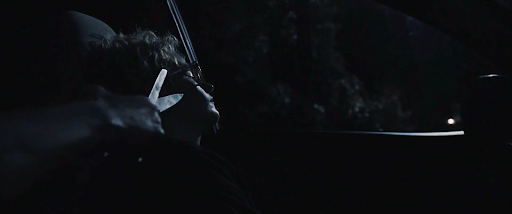
4. WEAPONS
Director: Zach Cregger
My introduction to the work of Zach Cregger came with 2022’s BARBARIAN, a film I consistently heard I should avoid knowing anything about before sitting in the dark of my local cinema. And boy, were they right. Jesus Christ, what a wild ride. Cregger, previously a member of sketch troop the Whitest Kids U’Know, has become another unexpected master of horror straight from the world of comedy. Who can better point out the horrors of our world more than a comedian, someone whose occupation is taking something in our daily lives and pulling it apart to find the oddly funny moments in the most mundane parts? Even the most serious horror films can be funny if you look at them from a certain point of view. Life is often humorous, horrific, and downright uncomfortable, and Cregger’s film makes you sit with the discomfort rather than seek catharsis. Told from multiple perspectives, each of WEAPONS’ fragmented sections drops little breadcrumbs into the very bizarre circumstances surrounding the disappearance of a bunch of students in the middle of the night. I’m being purposefully vague for anyone scrolling through this list looking for 2025 recommendations. If you want to revel in the deeply drawn-out tensions of WEAPONS, don’t read another goddamn word about it. Though, I have to be honest, even if someone tried to explain the plot to me before seeing it, I’m not even sure I’d understand it enough to ruin it. If you’re lucky enough to know nothing about WEAPONS and have yet to see it, run out of your front door this instant with your arms sort of flapping behind you and seek it out. [Jack Probst]
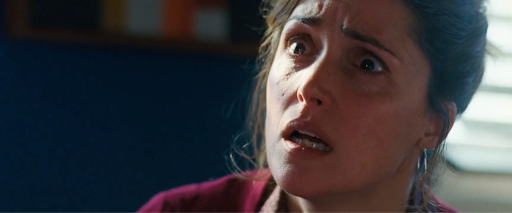
3. IF I HAD LEGS I’D KICK YOU
Director: Mary Bronstein
Mary Bronstein has always been interested in evoking discomfort in her audience. She delights in manipulating sensory details via tight, frenetic camerawork to probe the thorny inner lives of unlikeable women who make questionable choices. Bronstein wrote, directed, and starred in her microbudget 2008 debut feature YEAST, which took an uncommon magnifying glass to a painfully codependent friendship pattern between two young adult women living together in a cramped New York City apartment. Her career has been historically overshadowed in the contemporary mumblecore canon by that of her husband Ronald Bronstein, whose directorial work on FROWNLAND and acting chops central to the Safdies’ DADDY LONGLEGS have already been written about ad infinitum. After a nearly two-decade hiatus, Mary Bronstein has returned with a larger budget to reclaim her seat at the table. Once again writing, directing, and acting, Bronstein seamlessly fuses form and content to subvert conventional mother-love stories with IF I HAD LEGS I’D KICK YOU. Traditionally, mother-daughter narratives explore the identities of both parties; Bronstein flips this practice on its head by banishing the nameless child to offscreen sound and space, emphasizing the mother’s difficulty connecting with her young daughter. Bronstein narrows in on Linda (Rose Byrne), a headstrong working mother who struggles desperately against a cacophony of difficult circumstances to help her daughter through an inscrutable, life-threatening illness. Bronstein fundamentally understands the painful reality of many working mothers who are constantly urged to do more—to be better—even as their support systems and senses of agency are diminished by rising American patriarchal forces. Although apprehension toward fatherhood is well-trodden cinematic territory (DADDY LONGLEGS is a prime example), repulsive feelings surrounding motherhood remain taboo. Bronstein gleefully shoves these social codes back in our faces by employing her signature visual language of challenging tight close-ups. The result is a relentlessly frustrating pressure-cooker of a film, IF I HAD LEGS I’D KICK YOU effectively forcing the viewer to confront their own internalized ideas about the unfairly gendered division of household labor and its direct relation to “bad” motherhood. [Katarina Docalovich]
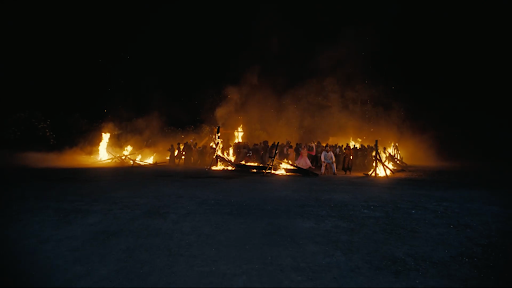
2. SINNERS
Director: Ryan Coogler
There’s been a lot of hemming and hawing about SINNERS’ awards prospects. Will the Academy recognize Ryan Coogler after he created a monster hit that he will own the rights to in a quarter-century? Does Michael B. Jordan deserve to triumph over Timothée Chalamet for playing twice as many roles? Is horror a viable genre for Best Picture? I find all of these questions to be irrelevant in the grand scheme when pontificating on the legacy of a film as monumental as this. By the time Ryan Coogler owns the rights, SINNERS will be a mainstay in conversations about the most beloved and influential horror blockbusters alongside JAWS, THE EXORCIST, and SCREAM. Future horror filmmakers will reminisce about how Remmick’s blood-red eyes during his first feast was the fuel for their first pleasurable nightmares. Musicians will pick up a guitar so that they can play “I Lied To You.” In that sense, SINNERS fully embodies its iconic centerpiece sequence in which Sammie summons the music of past, present, and future to commiserate in Smoke and Stack’s juke joint on that fateful night. This eerie rock opera shares as much DNA with WEST SIDE STORY as it does FROM DUSK ‘TIL DAWN, with bloodshed, song, and dance synthesizing the story in perfect harmony. In the tradition of musical theater, Coogler blends an ensemble of giants (Michael B. Jordan, Delroy Lindo), underappreciated day players (Jack O’Connell, Hailee Steinfeld), and relative unknowns (Miles Caton, Wunmi Mosaku, Jayme Lawson, Li Jun Li), giving each and every one of them an iconic character (or two!) that they can now define their careers with. It tells a story of community through the uplift of multiple actors of color in a time where both the industry and the world at large is intent on going backwards. Coogler cemented himself as a big-ticket filmmaker with CREED and BLACK PANTHER. With SINNERS, he begins his ascent into legend. He matures his astute storytelling instincts into genuine folklore. SINNERS may not become his most canonized work, and he may have to make his TITANIC, CHICAGO, or OPPENHEIMER for that to happen; however, it is thus far his biggest stride towards becoming a cinematic legend. [Michael Fairbanks]
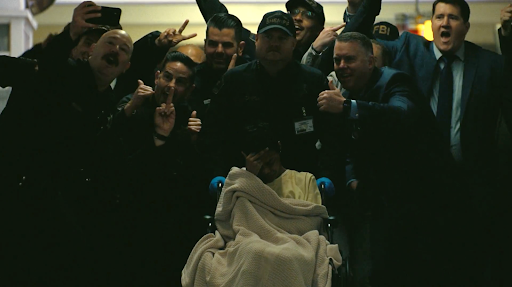
1. ONE BATTLE AFTER ANOTHER
Director: Paul Thomas Anderson
My dreams keep getting invaded by I.C.E. Dinner dates, nostalgic reveries through my college years, tense benders … At some point in these scenarios, like ants in the kitchen, my brain will pit me against smug federal vermin. Meatheads that don’t respond to reason, and, because it’s a dream, all my knives and bullets bend like rubber. I’m far from the only one. More and more, our subconscious succumbs to the lethal arm of the ruling party, our daily standing better resembling throat-slit beef cattle on meathooks. In Vineland, the Pynchonian lens positions people as stand-ins for the maximalist casualties of Reaganism, but PTA’s sprawling adaptation plays switcheroo with the dynamic, and in a move somehow more important than teaching the masses how to plant nail bombs in unmarked SUVs, ONE BATTLE AFTER ANOTHER cherishes who the few brave among us have become under the Trumpian rise of what can only be described as Christian ISIS. When the opposition is Reverend Al Sharpton leading “buy-ins” at Harlem Costcos in gratitude of the corporation retaining their DEI initiatives, Comrade Josh starts looking like Che Guevara.
So beautiful is that while Anderson contends that the guns blazing approach is bound to a higher chance of burning out, it’s not like planting bombs behind enemy lines doesn’t inspire the masses: Sensei Sergio, who’s founded an exquisitely crude Harriet Tubman situation that courses through the entirety of the Central Valley, is spurred by the opportunity to hold bumbling Bob’s hand through the budding gardens of a retaliation he’d once dedicated his life to watering. With the largest sum of resources he’s ever had access to, Paul Thomas Anderson spewed decades of perversions, passions, and fears onto the page, and now we have a Best Picture frontrunner that unabashedly frames the United States armed forces as an extended arm of the Ku Klux Klan. It’s like nothing you’ve ever seen, but nonetheless as classical as it is startlingly modern. We often look to Hollywood for a sense of direction, and the movies—as designed—respond to our probes. Defeat the Empire and rescue the princess. Retrieve Debbie from Comanche grips. Find Willa. But the differentiating factor between grand entertainment and great cinema are the possibilities that the works implore us to imagine. Discover a galactic cause greater than flipping contracts on Tatooine. Bigotry-blinded vendettas will only curtail you into the soulless solitude of the vast West Texan plains. In ONE BATTLE AFTER ANOTHER, we are dared to turn our hope into a gun.
In the words of Billy Goat:
“You’re maybe starting to see how corrupt to the core this whole fucking charade is. This great, noble experiment in self-government. Bought and sold by billionaires. The Davos crowd. Openly racist, fucking Bell Curve Nazis. It’s bedtime for democracy, comrades, good night. So you’re feeling like maybe your mind is starting to erode? Good. […] This is happening on the ground through coordinated effort, and strategic lines of resistance every day, working through dedicated teamwork to take it directly to the capitalist overlords who are extracting value from your life this very second. […] What, you think this is Facebook? This is gonna happen on your Instagram? It’s gonna happen on a hashtag somewhere? I think not.” [Kevin Cookman]









Comments