

 By
By Jordan Rowe and I go way back. For most of my life, I knew him as “Rowenet,” just as I was better known as “kacman11” at our tender ages of 12 through 17. We came up through the trenches, meaning we were teenagers who reviewed movies on YouTube to a shared subscriber base of 3,500 other teenagers and miscellaneous middle-aged nerds. The viewcounts were modest, but we were invested in a cinematic education outside of what hours wasted in Algebra II could offer us—with every precocious rave or vicious pan, we were hell-bent on learning the most we could about movies through our critiques of them, collaborating as often as we could. As with most teenaged friends, we went our separate ways for college: he to NYU’s Tisch School of the Arts, and myself to Chapman University. With aging came new topics of discussion with new circles of friends: fewer Barnes and Noble Criterion sales recommendations, more lamenting useless landlords and fallen-through gigs. As aging into your 20s will tend to do, Jordan and I drifted into our disparate adult lives on opposite ends of the coast.
Until a few months ago. I got a text from Rowenet telling me that his debut feature, HAMILTON HOUSE—a Lynn Shelton-esque ensemble dramedy about a group of down-on-their-luck Brooklyn screen actors who decide to transform their basement apartment into a last-minute haunted house to impress the acclaimed horror director moving in down the street—would be premiering at Hollywood’s Chinese Theater during Dances with Films 2026. Goddamn, he really went and did it, he made a movie … That’s a lot of rent. In an afternoon slot (in the same massive auditorium I’d seen BUGONIA at AFI Fest—Rowe remarked, “When the festival told us the theater we were premiering in was 380 seats, I was like, ‘What? Excuse me? I don’t have that many friends’”), HAMILTON HOUSE premiered to not only its largest audience, but on its largest screen, with a crowd primarily filled with cast and crew who’d flown in from New York City to see themselves blown up on hallowed grounds. When the film finished, a festival worker politely advised the crowd that another premiere was set to enter in exactly five minutes, that micro-budget indie also towing a full audience of cast, crew, and supporting family and friends. Even in a niche indie fest on a busy Los Angeles Saturday, it was a crowded field. Regardless, I could see that Rowe was amped by the reception. When I asked him if he had an all-day rager planned with his visiting crew, he told me, “Yeah, I’m gonna get some burgers and probably go to bed early!”
I caught up with Jordan a few weeks later in mid-July—removed from the type of adrenaline that premiering your art to its first public eyes can only offer—to educate me on how he made his own version of the type of movie he grew up loving, releasing it in an ecosystem that’s more competitive than ever.
This interview has been edited for length and clarity.
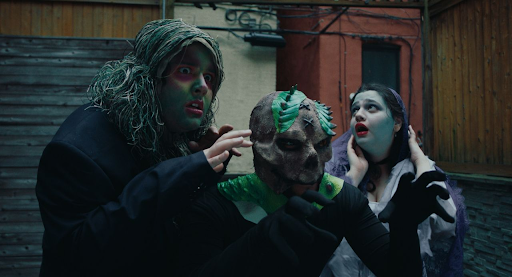
I can imagine you’ve gotten this from producers, parents, colleagues, financiers … You made an independent movie and you premiered it. What now?
Jordan Rowe: I would love to know the answer to that question. The real next thing we are hoping to do is get a distributor. Being realistic, Dances With Films is a lovely festival, but it’s not the kind of festival where there’s going to be bidding wars, and we knew that going in. It’s a splashy way to debut the movie, so in whatever way that can help us get a distributor, that’s the purpose of it. What we do now is hope we get into more festivals. If one screening gets us a foot in the door, that’s great, but also self-distribution and straight-to-consumer is a way to go. It’s still nebulous, but now that we have a proven premiere screening, we’ve gotten some reviews, we have a Rotten Tomatoes page, [the movie] is a real thing we can point to now.
So, you and your team have a preference to get picked up over self-distro?
JR: It’s just way harder to self-distro. It’s more expensive. All of the things you take for granted when you look at big studio movies or indies from Neon … They have an apparatus for getting a movie into a thousand theaters and marketing it, even if it’s just social media. They have a reach that we don’t. Much like anything independent, it’s harder.
But, Jordan, they keep telling me that putting your movie on YouTube is the way of the future!
JR: Look, if someone can tell me how to make our budget back that way, that would be great. From what I understand, Curry Barker’s first movie was 800 bucks, so you’re not going to lose your home if you just drop that on YouTube, but for our movie, it would be irresponsible to just do that. At the very least, I think getting onto something like Tubi or self-releasing for digital rental, there’s potential for dollars and cents. Maybe you’re right, maybe I should just put it on YouTube right after we get off the call.
Are you able to share what the final budget of HAMILTON HOUSE is? Since you guys are entering the festival circuit, is the budget even at a final stage?
JR: I’ll say it’s sub-$100k. Honestly, it could change depending on if the next festival requires travel. It’s more money than I’ve ever raised in my life for anything, but it’s, in the scheme of things, not a lot for a feature film.
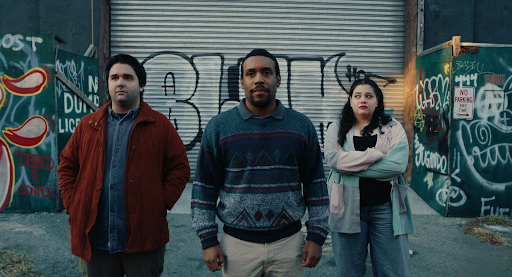
Let’s time travel to 2024. Donald Trump is steamrolling Joe Biden. The average homeowner age is 41. The American film industry is not bouncing back from COVID, let alone the guild strikes, and you still went ahead and made an indie movie. Why?
JR: If you want to do it, there’s never a right time to do it. The world’s always on fire in some capacity, right? Everyone’s raving about OBSESSION and I think they filmed in 2024 as well. I can’t think like that, and certainly can’t make creative or artistic decisions based on that. Keeping the budget low was always important to us, and made it possible to make the movie. During COVID, what did everyone do? Watch stuff, as you and I probably did. There’s never going to be a bad time to want to watch things. [We wanted to do] it in whatever kind of economically responsible way that wasn’t going to sacrifice the quality of the movie, because you can only cut corners so much until it looks like a student film. It was something that I’ve always wanted to do, and if the world was going to be on fire while we did it, then great, bring it on.
With indie filmmaking, it feels like there’s an equal share of total creative freedom and entrepreneurial business-running. How do you wed those two inherently warring concepts?
JR: That was the biggest learning curve. I’ve made shorts before, and the actual directing of them isn’t easy or anything, but I have an understanding of how that works. Making an LLC, and getting investors, and now trying to find a buyer for the movie … There’s a reason that, at a certain level, a studio takes care of that, or an indie producer just takes care of that. But, when you’re at this level, you have to do a little bit of everything, and having a core sense of what the movie is and what audience you’re serving will inform the business. The amount of time we’ve had to tell people this isn’t a horror movie, but is about Halloween, is an annoying correction, but it makes us specific.
When you saw the amount of money you had to work with—the most you’ve ever worked with in your life—did that fortify or even modify the script?
JR: We actually tried making this for more money. There was a version of this where we had name-actors as day-players, but SAG-AFTRA actors cost money. We had a few more shooting days, locations, crew people, and all these things that make the machine run smoother, but this was never a movie that needed a certain budget to be pulled off. It’s a modern-day, character-driven movie set primarily in one location that we had access to—it was using resources we knew we had. The whole movie didn’t hinge on a third-act visual effects shot, so at its bare bones, we were able to tell the story that we wanted. “If we had to make this next weekend, how would we do it?” was the mode we had to do it. We were trying to raise several hundreds of thousands dollars, but we were up against people who had made the micro-budget $10,000 movie before that they can point to. We’re nobodies by comparison, so how do we stake our claim, but still feel artistically good about what we’re doing?
Is there a version of HAMILTON HOUSE in your head that’s a Netflix Original?
JR: From the jump, it was written to be micro-budget, but it came out of another script I was working on for a number years following the same arc of arrested development of a young guy right out of college trying to pursue an artistic career who shortcuts a way to success and crashes and burns with a reality check. There’s a version of that story that’s a big ensemble comedy, but that just wasn’t going to happen at this stage of my career. So, we looked at the $0 version of the arc of that story. For all of us, it was our first feature, so even if it didn’t become the big festival success we wanted it to be, we went into this because it was a thing we could be proud of that could get us the next thing.
I ask that because the film is cleverly constructed, literally. When you mentioned that the original concept was going to balloon the budget to a level where you couldn’t pull off the film, it made me wonder why you’d stick with this story, but the truth of the matter—that you found—is that HAMILTON HOUSE is scalable at various budgets. Was the scaling painful at all?
JR: There’s a version where we shot at my buddy’s brownstone, but we scaled it down to this basement apartment, which in hindsight is better for the story, because the brownstone looked too nice of a place to live in. Having fresh-faced actors as opposed to folks who’ve done an episode of a Netflix show or a supporting role in a movie that went to Tribeca established more that these are underdogs that you want to succeed, so the scaling fed into what the movie was striving for. There were many happy accidents.
Was casting Jared Gilman in a faceless cameo another happy accident?
JR: It was a friend doing a friend a solid. He was the lead of my short, THE RESERVOIR, and he’s been a friend in the New York film orbit for a bit. But, he’s a SAG actor, and that’s one day of work. If he’s the lead, even at a “friends and family” rate, that balloons our budget by quite a lot.
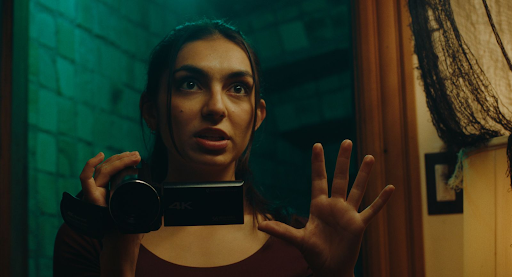
In New York right now, it’s Ryan Martin Brown, Joanna Arnow, and Sean Price Williams who are these figures of a modern film movement where being a jack-of-all-tradesman has afforded them an in-house network of multi-expertise creatives in addition to a favor economy they can all cull from. For you, does being a New York filmmaker bring a similar level of community as being a straight-up New Yorker does?
JR: I know Ryan a little bit, and—have you seen FREE TIME, the feature he directed?
We interviewed him on the site about it!
JR: Oh cool, so I’ll be very transparent. My producers and I were struggling to figure out how we were going to make this movie. We went to a Q&A screening of FREE TIME where Griffin Newman was moderating, and when we saw it, my producers and I thought there was no reason why we couldn’t just make our movie now. We went to NYU, and they taught us how to do things by the book, which is good, but I think if you get so pigeonholed by that, it paralyzes you and then things don’t get made. What I admire about Ryan and that DIY favor economy movement is it actually gets the thing made, and finished, and, the key, distributed. It’s a very real thing now that Ryan and his crew can go to a distributor or production company and go, “Hey, we made these couple of movies that maybe aren’t breaking box office records, but they’re good, smart, real movies you can buy on Amazon.” His movie played the Quad, this great Greenwich Village storied theater, and they didn’t need all these crazy toys we were taught to need. Being a New Yorker really breeds that resourcefulness, and that strongheaded “getting it done no matter what.” I drove the van to pick up equipment and then to location scout with my crew: It’s all about being able to get it done by any means necessary. There’s rules of the world and on-paper “what you’re supposed to do,” but as long as you’re not being a dick in a public space, you’re able to do your thing.
For anyone who doesn’t know how, how do you make an indie movie in New York City?
JR: You do it with a team of people who can do things that you don’t do. I was developing HAMILTON HOUSE for a while, and until my two producers, Greg Contaldi and Julianne Mason, came into the picture, it was very stop-and-start. Having producers from the jump is so important. Everyone asks what a producer actually does, and the answer is everything. They’ve been with me on the project for three years now, long before we started shooting and long after the movie wrapped. For us, it was also a great cinematographer in Robert E. Newman, who I went to college with, and Isabella Evans, who was our production designer. Having that key cohort, including Lucciana Pascual as our assistant director, was crucial and life-saving. To shoot in New York City, you don’t want too many people, because it gets unwieldy, and you want everyone on the same page: It’s not going to be easy, but it’s going to be possible. It is a little delusion and blind ambition, but there’s also the same level of commitment to seeing it through.
The characters of HAMILTON HOUSE have all aged out of “post-grad” and have scraped together this grand artistic gesture with money that should be going towards rent, spare change, and a bucket of favors; it’s hard not to think about the making of HAMILTON HOUSE when you’re watching it. How auto-biographical is the movie, really?
JR: I’ve never made a haunted house and I’m not an actor out of acting school, so maybe it’s not the same goal, but I put on DIY music shows with different groups of friends with the hopes that one of the other people on the bill who has a slightly bigger following than the rest of us brings their friends and expands it; it is all based on this promise of a light on the horizon that’s probably a mirage, but may not be! You never know until you try. The character of Jacob, the roommate that subleases his room to make a movie with Idris Elba, comes back at the end of the movie and he’s still measuring himself against people ahead of him. We’re looking at an indie success story like Curry Barker, and, because we’re NYU alumni, SHIVA BABY: We went to school with those guys, and I don’t know them super well, but Rachel [Sennott] was in our class in the acting program. That was a short that turned into a feature that blew up! These thoughts of chasing the person a few steps in front of you is in the DNA of our characters.
Walk us through the process of writing, casting, and then directing your lead performance, because I wouldn’t consider Zach a directorial self-insert.
JR: No, he’s not.
Full disclosure, you and I have known each other since we were kids, and this delicate slob who exists in the passive-aggressive nexus of “theater brat” and “trash enthusiast” couldn’t be further from your personality, which I find interesting given how 1:1 so much of the making of the haunted house is to the making of this movie. Everything is so similar to how it really was … Except for this guy!
JR: He’s definitely not like me, but Vivian, his girlfriend, is much more like me: a little more of a realist who wants to advance her career in a way that Zach dreams of, but doesn’t have a practical plan to execute. Opposites attract, and with Vivian and Zach, there’s a reason they’ve been together. I’ve certainly been charmed by Zachs! It’s totally outside of your own intuitive sense of decision-making, but it’s that spontaneity that draws her to him and has drawn me to Zachs over the years, male and female. Everyone else in the cast was a friend of mine, someone I went to school with, or a friend of a friend, but Elijah [Lawrence], who plays Zach, was from an open casting call. He sent a self-tape three weeks before we started shooting; I sensed he was out there, but we didn’t find him until we did. That was the Movie Gods. Casting that character was an “I’ll know it when I see it” approach, and thankfully in New York, there’s a ton of great actors, and we were bound to meet him at some point.
In your mind, is indie filmmaking an arena of creative freedom or one of restrictions?
JR: Both! Using the restrictions to create the freedoms. It’s having a self-awareness of what you’re making: We weren’t making GANGS OF NEW YORK, we were making a small character piece. Had I not had faith in my performers, I wouldn’t have taken the risk [of letting them find their characters on set]. Even if you have more money, there’s a plan that can’t happen, or you get locked out of a location, or it rains that day, or you run out of money … It’s all you trying to control real-life elements, and you’re always going to be restricted. With the great directors we all look at, yes, they have more money, but they know what they want to get done. It’s very unartistic in that way. That takes a lifetime to master.
Your movie concludes on a disarmingly mature note, especially for one that’s so personal. It doesn’t feel like your characters go into building a haunted house thinking it’s a make-or-break, but it does culminate in their lives being thrown into total free-fall. Everyone grows, by force, but you refrain from showing us their blossoming. There’s a measured, bittersweet series of incomplete arcs in which you don’t explicitly promise the viewer any futures filled with riches or professional successes. Your characters have changed, but not in a way that seeks to convince us the changes are permanent, which I found spectacular. To you, is this way of thinking just realism, or is it part of your personal worldview?
JR: It’s definitely both. I respond more when characters in movies act like real people, without dumb movie-y manufactured conflicts. Life has enough conflicts, and it really comes down to knowing who these people are and why they make decisions the way they make them. The characters in our movie got together in college, and we find them at a crossroads where they’re evolving at different rates, and, in some cases, different directions. Zach follows Vivian’s lead, and doing things her way wouldn’t feel natural or fulfilling to him necessarily, so, I think as far as my worldview, I am an optimist, and I don’t think the movie ends on a bummer note, but there is a sober realism to [the characters’] growth and peace. The moderator at our Q&A said, “He gets the girl at the end!” and in my mind I said, “No he doesn’t!” These are young people figuring it out, and people figure things out in different ways, and their goals shift. More than thinking about it naturalistically, it was thinking about it truer to how people are. I appreciate you recognizing that, because there was no world where the haunted house was going to work. To me, it’s always more about the people than any set-piece or anything.
You have a feature under your belt now. At the end of this premiere experience, this production experience, and in this sales experience, do you see this as a crossroads for yourself, too?
I’m still with the movie until it sells and releases before I can properly send it away, but now I’m excited about getting that reception from audiences: listening to it, but not overlistening to it, and taking those things into account to level up for the next movie. I’m proud of the movie, but it’s a first movie, ultimately. I definitely know where I stand, so having that self-awareness of what we learned and what’s achievable at a certain level … You know, I certainly feel like I’ve evolved past where the characters in the movie have evolved by the end. In many ways, this movie was my grad school: It was many NYU classmates coming along in front of and behind the camera, it was taking what we did with a 20-minute thesis and blowing it up to an 80-minute feature. Grad school’s over, so now what’s next? I’m 30 now. So, what does that look like?
You can keep up with HAMILTON HOUSE on its official website and on Instagram.










Comments