

 By
By This marks my sixth year attending Sundance from the comfort of my couch, my cozy blankets, and my two fluffy kittens. While I didn’t get the chance to see all of the short films offered this year, I was thoroughly impressed with the lineup I did get to experience—from Midnight shorts to documentaries, animated films, and stirring dramas. Some common themes that stood out to me centered on grappling with identity, care, labor, intimacy, and power, which felt not only personal and vulnerable, but also culturally urgent. Most importantly, I felt these filmmakers placed immense trust in their audiences to do their own reflecting. I found myself connecting my personal experiences and observations to the themes and values explored on screen. If this year’s shorts are any indication, the future of independent cinema is in thoughtful, fearless hands—and I’m excited to keep following where these storytellers go next.
GENDER STUDIES
Director: Jamie Kiernan O’Brien
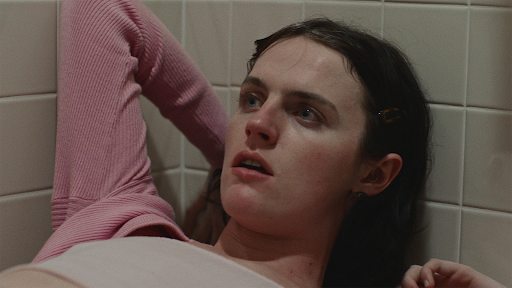
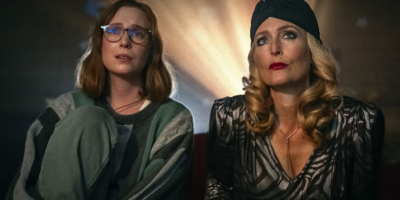
GENDER STUDIES follows a trans woman navigating a gender studies class, her growing parasocial fixation on a cis female peer, and her relationship with their classroom TA. This is a gorgeous and devastating film that isn’t just about a trans woman’s experience, but about the quiet, complicated things that, for better or worse, often unite women. The constant comparison, the desire to be chosen, and the pull of male validation as a way to feel secure in one’s femininity and sexuality. And, inevitably, the shared reality that all women encounter in one form or another: dehumanization and misogyny from men. What struck me most is how the film doesn’t position these experiences as uniquely trans, but as deeply, painfully universal. It wasn’t lost on me that the major revelations of womanhood in this film all unfold in bathrooms. The girls’ bathroom becomes a site of gender discovery and validation, the all-gender bathroom shifts into a space of sexual exploration and exploitation, and the home bathroom transforms into a place for self-care, emotional release, and reckoning where physical and mental wounds are tended to in private. The film beautifully underscores how bathrooms are never just functional spaces; they’re where identity, vulnerability, and survival quietly play out. The girls’ bathroom scenes stood out to me in particular. For all the ways the right-wing tries framing bathrooms as battlegrounds, this film presents them as places of refuge—spaces where women find sisterhood.
I keep coming back to the scene where one woman asks the other for a tampon or pad. Among cis women, asking for a tampon is an act of trust: a kind of shorthand for solidarity, and a great equalizer. Watching this moment through a trans lens adds layers to the hallowed interaction. For a trans woman, that same request can hold two truths at once, such as affirmation of being seen and accepted as passing, alongside the potential sting of dysphoria tied to biological difference. The film doesn’t shy away from that complexity, and that’s what makes it feel so honest. What moved me most is how the lead initially compares herself to the cis woman in her class, only to slowly realize that they aren’t so different after all. Their fears, desires, insecurities, and longings mirror each other far more than they diverge. We don’t get enough stories that explore the connective possibilities of sisterhood between cis and trans women. This film understands that for all the differences certain groups try to exaggerate, cis and trans women share far more common ground, and that narrative needs amplification. The greater message here is that not all women menstruate, but that all women bleed. The performances are stunning, the story layered and deeply felt, and it left me wanting to follow this character far beyond the film’s runtime. Jake Junkins is an absolute star, and I hope this story grows into something even bigger.
GOING SANE: THE RISE AND FALL OF THE CENTER FOR FEELING THERAPY
Director: Joey Izzo
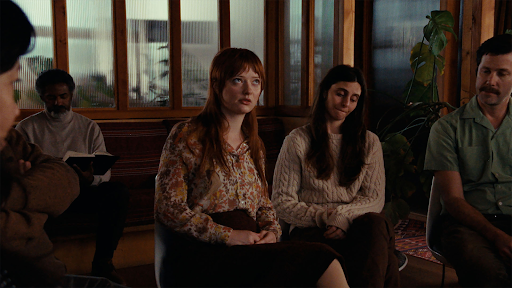
GOING SANE: THE RISE AND FALL OF THE CENTER FOR FEELING THERAPY is a documentary short about the Center for Feeling Therapy, a controversial Los Angeles-based therapy collective that operated from 1971 until it collapsed and shut down in November 1980. At its peak, the Center reportedly had hundreds of members living communally and running businesses until its founders were later stripped of their licenses and banned from practicing in California following lawsuits in the mid-to-late 1980s.
I’m in the midst of my own graduate program in therapy right now, and I find myself constantly thinking about how the human mind tries to make sense of harm, and even outright atrocities, when they’re framed as “self-improvement.” We’ve seen this pattern over and over again, from NXIVM to Jonestown, because at the core of it is something painfully human. We want to grow. We want to belong. We want to believe we’re making the world better while becoming better versions of ourselves. One moment in GOING SANE that stayed with me was the relentless verbal dismantling of the women in the group: the cruel critiques of their bodies, intelligence, and worth, all delivered under the guise of “truth-telling” and emotional honesty. What’s so disturbing is how normalized this cruelty becomes inside the group. The language is clinical. The tone is righteous. And because it’s framed as therapeutic insight, the harm is treated not only as acceptable, but necessary.
Watching these scenes, I couldn’t help but think about how similar tactics have been playing out in more recent, very public cases—particularly in the case of Jodi Hildebrandt, a disgraced former Mormon therapist who led cult-ish lectures that dismissed and even promoted child abuse and fracturing of families by framing normal human impulses as moral failures. In both contexts, ordinary thoughts and feelings—desire, insecurity, curiosity—are pathologized and recast as evidence of danger or corruption. Shame becomes the primary mechanism of control, and “accountability” is used to justify humiliation and exclusion. What’s most unsettling about GOING SANE is not just the abuse itself, but how easily therapeutic language is repurposed to carry it out. Concepts meant to foster insight, growth, and care—words like “boundaries,” “truth,” “responsibility,” or “doing the work”—are stripped of nuance and turned into blunt instruments. Because the language sounds familiar, even benevolent, the manipulation hides in plain sight. It doesn’t just harm the people inside the group; it creates an environment where others, including mental health professionals, may hesitate to intervene. Films about cults are always compelling, but GOING SANE is especially unsettling because it exposes how coercion can look calm, reasonable, and even progressive. The film serves as a stark reminder that narratives of healing and growth can grow dangerous when they demand obedience, suppress dissent, and replace care with control. History will always find a way to repeat itself if we stop interrogating who gets to define “healing” and who pays the price for that definition.
LIVING WITH A VISIONARY
Director: Stephen P. Neary
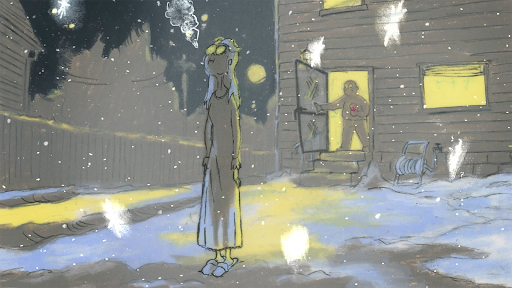
LIVING WITH A VISIONARY is a gentle, but surreal, animated short exploring one husband’s relationship with his wife experiencing dementia, and his journey with her through the perspective of love, imagination, and the shifting roles of care between partners. My mother has dementia, and my father, who has been with her since they were in third grade, has been her full-time caretaker. My biggest fear in the world is something happening to my dad that would rip him and my mom apart during the time when she has needed him most. And truthfully, he needs her just as much as she needs him. Because of that, LIVING WITH A VISIONARY hit painfully close to home. And yet, instead of amplifying that fear, the film held me. The serenity of the animation, the soothing cadence of the narrator’s voice, the beautiful music, and the gentle, dreamlike visions of the flower-y men created a sense of safety rather than dread. It allowed me to sit with my anticipatory grief without being swallowed by it. Being held by art in that emotional limbo made me feel understood and not alone.
What this film also gave me was a perspective on caretaking itself. The caretakers still need to be cared for. I am a caretaker for my father as much as he is the caretaker for my mother, and that dual role can be as tender as it is exhausting. LIVING WITH A VISIONARY understands that caretaking isn’t just pain; it’s also full of unexpected moments of joy. There are funny little mishaps. There are surreal, even beautiful hallucinations that turn something frightening into something strangely wondrous. The film honors the full spectrum of that experience, holding space for love, grief, humor, and imagination all at once. For anyone who understands the quiet, complicated intimacy of caring for someone with memory loss, and the strange ways joy still finds its way in, this film feels like an offering.
THE BOYS AND THE BEES
Director: Arielle Knight
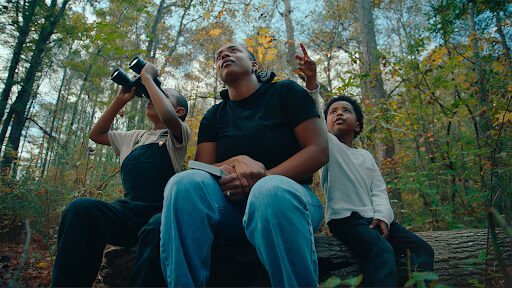
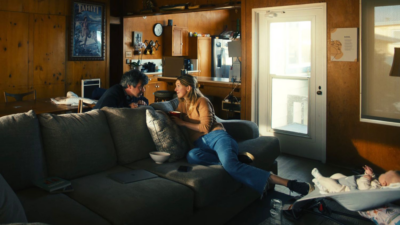
Oh man, I cried like a baby watching this sweet little slice of life. THE BOYS AND THE BEES follows a young Black couple with two young boys who practice land stewardship through beekeeping and other acts of homesteading. In the last few years, I’ve become deeply invested in Black homesteading and outdoor foraging content on TikTok and YouTube. It’s a niche space that layers practical, environmental knowledge with generational lore and an authentic spirit of reverie. There’s something profoundly moving about seeing Black families interacting with nature and the outdoors, especially since such representation remains so rare. But what truly stayed with me was how intentional this family is about building a generational legacy created by hand, together, over time.
This isn’t about wealth for wealth’s sake. It’s about cultivating rest, resilience, and peace as radical acts. It’s about building a life that allows for slowness, connection, and care—things Black families have historically been denied. In that way, legacy here isn’t just inheritance; it’s protection. It’s choosing to create a future that feels livable. The father’s comment about how the trees in his front yard might be the same kinds of trees his ancestors were once hung from was chilling—but also quietly triumphant. It underscored how deeply intentional this work is. He’s not just surviving: He’s building a life that generations before him were denied the chance to even imagine. This story feels deeply connected to a broader cultural moment in which Black communities are not only surviving systems designed to break them, but actively thriving beyond them. Cinema needs more stories like this that reclaim joy, rest, and abundance without centering pain as the only narrative. Black stories are not just about overcoming trauma; they are about building toward something more.
AGNES
Director: Leah Vlemmiks
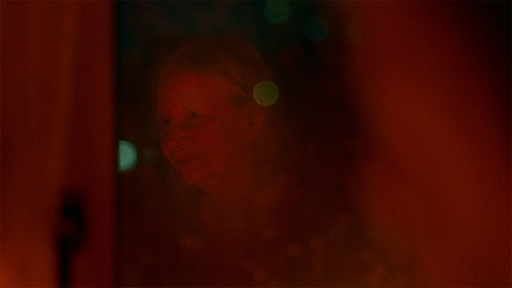
One of my biggest fears about getting older is losing my sense of agency and identity. Maybe that’s why I’ve pushed back so hard against motherhood—once you’re a mother, or a grandmother, that role can so easily become the most defining thing about you. I want to live a life that keeps my inner child alive. AGNES felt like a breath of fresh air in that regard, following a woman who remains firmly in charge of her own destiny rather than quietly submitting to what’s expected of an aging woman. One of the moments that moved me most was watching her dance at the club, fully uninhibited like nobody was watching. Nobody is pointing at her, questioning why an “old lady” is there on the dance floor. She’s not performing for anyone else. She’s dancing for herself. The film resists the idea that aging requires shrinking, settling, or invisibility. It refuses the narrative that desire and self-expression have expiration dates. I teared up watching her move through the world with such confidence and freedom, because what I saw was someone who believes it’s never too late, and lives that truth fully. I hope to still be dancing at the club in my 70s, too.
BUSY BODIES
Director: Kate Renshaw-Lewis
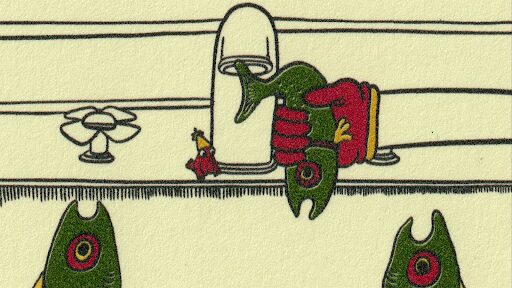
I loved this quiet reflection on mass industrialization in the Amazon age. BUSY BODIES uses looping, mechanical animation that depicts an industrial system that continues demanding output even as it visibly breaks down. The animation’s beautiful analog-printing textures reminded me of films from my youth, and the Rube Goldberg assembly lines were hypnotic. As the systems crumble, workers are still expected to move at the same relentless pace. I couldn’t help but think about my own burnout, a burnout that was so intense last year that I ultimately quit my career of over a decade. The film captures that feeling perfectly: being asked to keep going, to keep producing, even as everything around you is falling apart. In the age of automation, BUSY BODIES raises questions about how disposable workers become when efficiency is prioritized over humanity. It echoes many of the same anxieties I felt watching Park Chan-wook’s NO OTHER CHOICE, a growing discomfort with how capitalism treats the people it relies on most. The colors bleeding through the frames were apparently an accidental technique discovered during testing, as the director shared, but they add a complex and poignant layer to the film’s message. As Bob Ross would say, “happy mistakes.”
HOMEMADE GATORADE
Director: Carter Amelia Davis
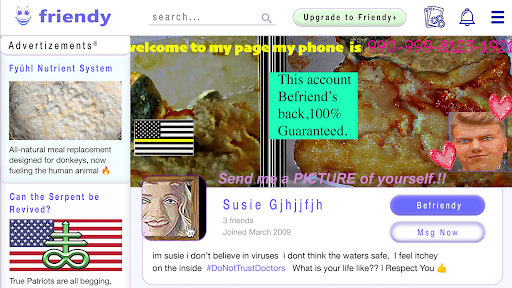
HOMEMADE GATORADE feels like a mid-2000s Creepypasta fever dream filtered through the present day, complete with some genuinely laugh-out-loud Easter eggs. It’s a sharp takedown of modern Internet culture and the always-on reality of brain-rot slop, parasocial connections, and a conspiracy-soaked hellscape you can never fully log out of. Even the supposed “benefits” of constant connection feel grimy, leaving a lingering, low-grade unease. What the film ultimately warns about is the danger of static and noise, and how being constantly plugged in dulls our intuition. There’s a misguided trust placed in parasocial relationships, in hustle culture, in the idea that connection can be manufactured rather than felt. The film captures how easily we ignore our gut instincts in favor of chasing productivity, even when something feels deeply off. In a world where we’re encouraged to always be optimizing, posting, and grinding, HOMEMADE GATORADE reminds us how unsettling it is to lose touch with ourselves. It’s not just about the horrors of the Internet, but what happens when we stop listening inward and let the noise decide for us.


Comments