

 By
By Though the queer community is deeply connected to horror movies, there’s always a bit of risk in making one directly about them. Hollywood is obsessed with queer suffering, especially in pursuit of prestige. The celebration of these films comes from their stories of outsiders triumphing over an imagined evil as those who fall into social norms die. In making gay people the primary target for terror, even in a fantasy scenario, a filmmaker risks playing into tired tropes that alienate more than represent. Adrian Chiarella’s LEVITICUS delicately walks this tightrope as two young men are terrorized by a spirit reflecting their desire for each other. Although I was riveted by the film’s stellar craft, I wondered how its brutally honest storyline would land with those more immersed in these experiences. Ultimately, LEVITICUS is driven by the resilience and survival of these boys. It weaves out of exploitation and becomes something genuinely powerful.
We follow Australian schoolmates Naim (Joe Bird) and Ryan (Stacy Clausen), who have recently started making out. They are under the watchful eye of their hyper-religious community and emotions are running high. While attempting to visit Ryan, Naim catches him kissing fellow classmate Hunter (Jeremy Blewitt). Betrayed, Naim outs him and Ryan is put through a disgusting conversion ritual that dramatically changes him. He becomes paranoid and outright terrified whenever Naim is in the same space as him. Naim believes that this is just a traumatized reaction until his mother (Mia Wasikowska) catches on to her son’s desires and sends him to the church to be “cleansed.” Afterwards, Naim starts seeing a silent version of Ryan who slowly stalks him until given the opportunity to attack. Both boys see this twisted reflection of their desire to transgress that will not stop until they are both dead.
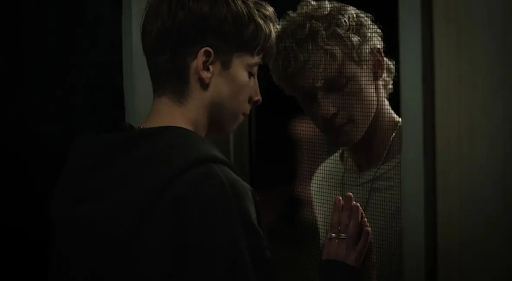
This concept is clearly influenced by David Robert Mitchell’s groundbreaking IT FOLLOWS, but the angle is entirely different. Mitchell’s film commented on the horror genre’s punishment of casual sex. Whatever personally drove those characters to be intimate didn’t matter. Their inherent mistake was trusting someone else with their bodies. However, once they became privy to the sexually transmitted demon’s ability to take the form of any random person, the only appropriate response was to run away. LEVITICUS’ malevolent spirits feed off the desire to hold someone who is hurting. Naim knows that Ryan is in agony and feels a deep desire to walk towards him regardless of which version he’s faced with. The possibility of helping the real Ryan heal is worth the risk. Ryan is far more avoidant, treating both real and fake Naim with the same level of disdain. Eventually, his heart starts to re-open, but only because Naim refuses to give up on him. Joe Bird and Stacy Clausen are both tremendous young actors who vividly bring this bruised, beautiful dynamic to life.
Adrian Chiarella showers this world in paranoia, fully immersing us in this bleak Australian town home to no desirable alternatives to romantic love. There is no tenderness in the interactions between Naim and his mother—Wasikowska is note-perfect as a hollowed-out adult child. He has no other friends or other interests to fill his time. His only comfort is Ryan, who either avoids or tries to kill him depending on which one he’s dealing with. Not every appearance of the spirit comes with major scares: Chiarella often just allows us to linger on the tragic knowledge that we are not looking at the real Ryan. The true terror comes from just how well this force imitates the person it latches onto. In the film’s outstanding climactic chase, the spirit starts more accurately channeling Ryan’s behavior in an attempt to lull Naim into a false comfort, and it’s thrilling to watch Naim suss this out.
LEVITICUS, more an exercise in despair than suspense, may underwhelm more casual viewers who value loud jolts over atmosphere and emotion in their horror. Meanwhile, I suspect many queer people will find it morbidly comforting. It holds Naim and Ryan close to the heart, not tormenting them in pursuit of shock. These are trials that they can overcome through their sheer humanity. It is a message worth remembering as the real-life forces who would conjure this spirit with glee become more powerful with each passing day. This is horror used as a potent force of resistance; an inspiration for more marginalized artists to pick up a camera and bring their deepest fears to life.










Comments